
Last updated September 20, 2026
Free on-site gate assessment - hinges, posts, and your LiftMaster or Nice gate operator checked before anything is quoted
The assessment is free and the quote is the invoice.

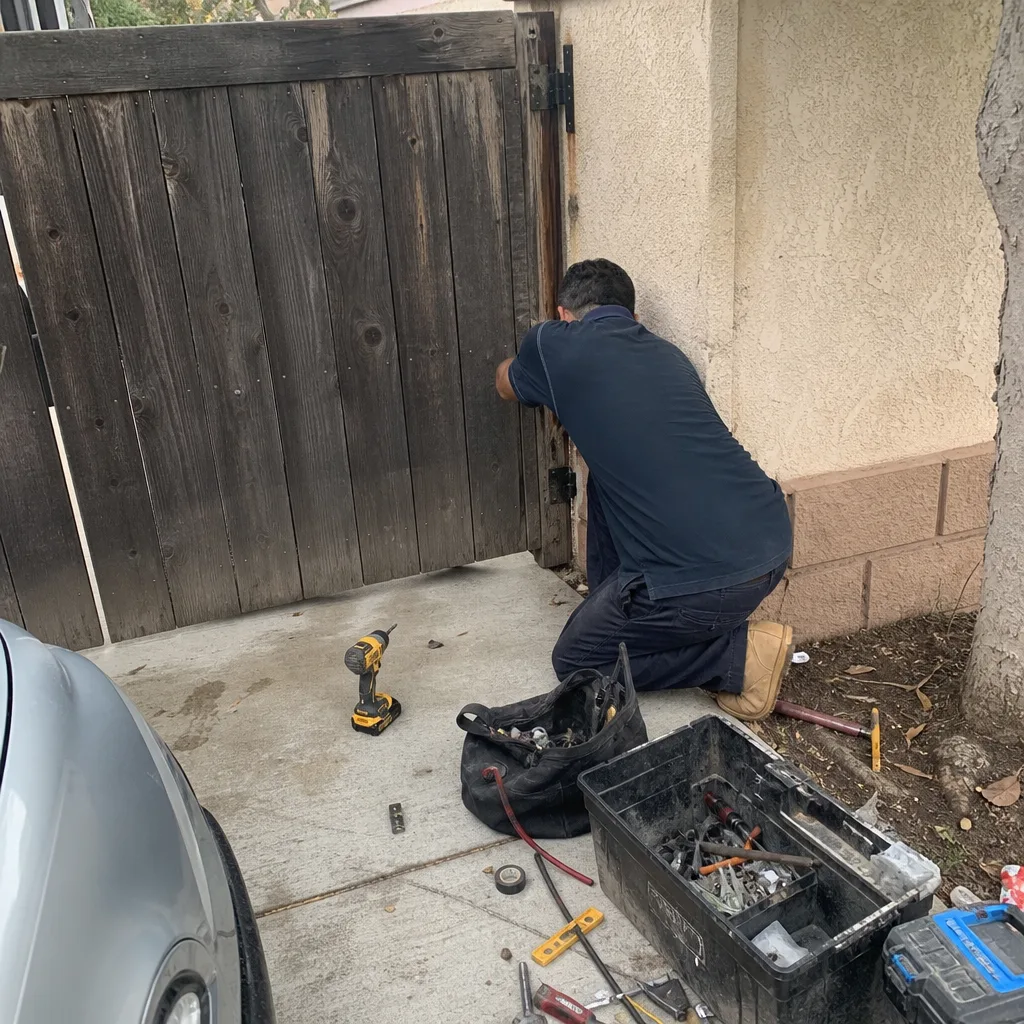 Before
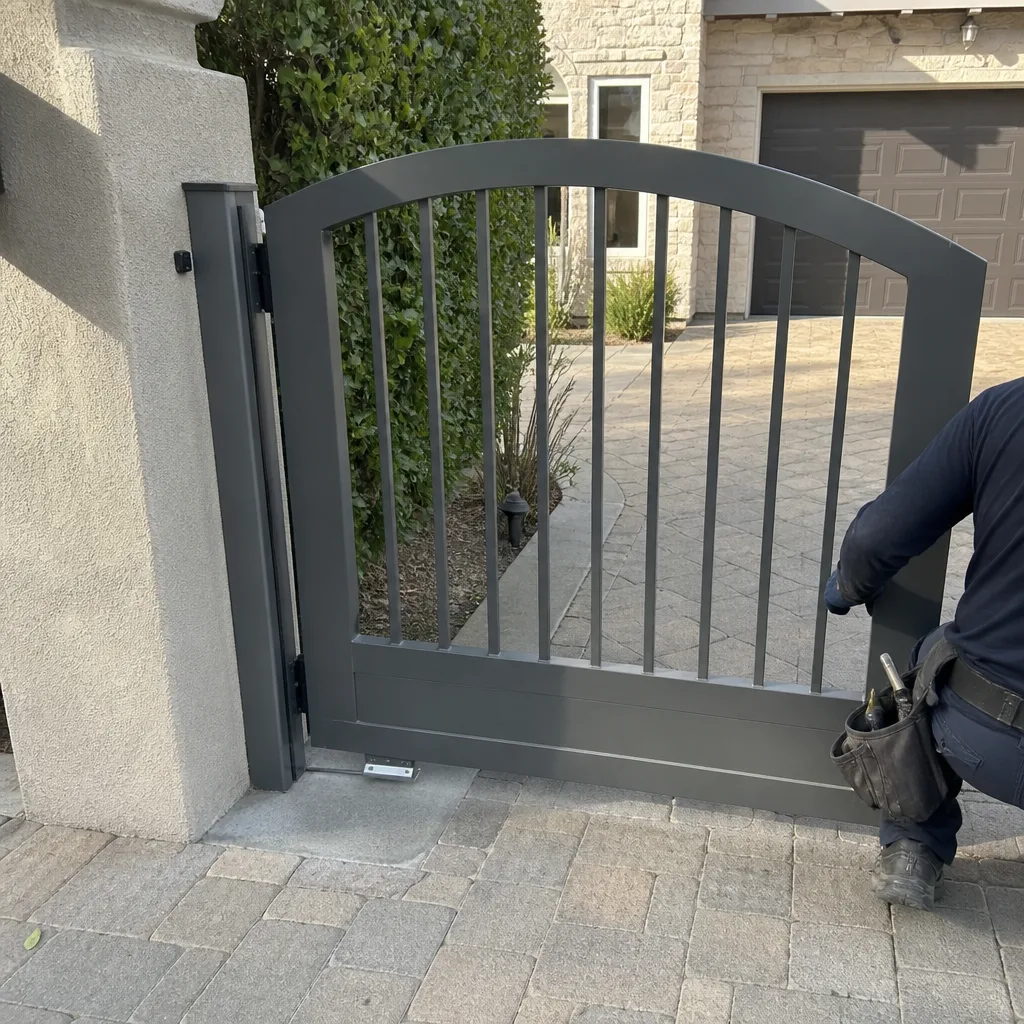 After
After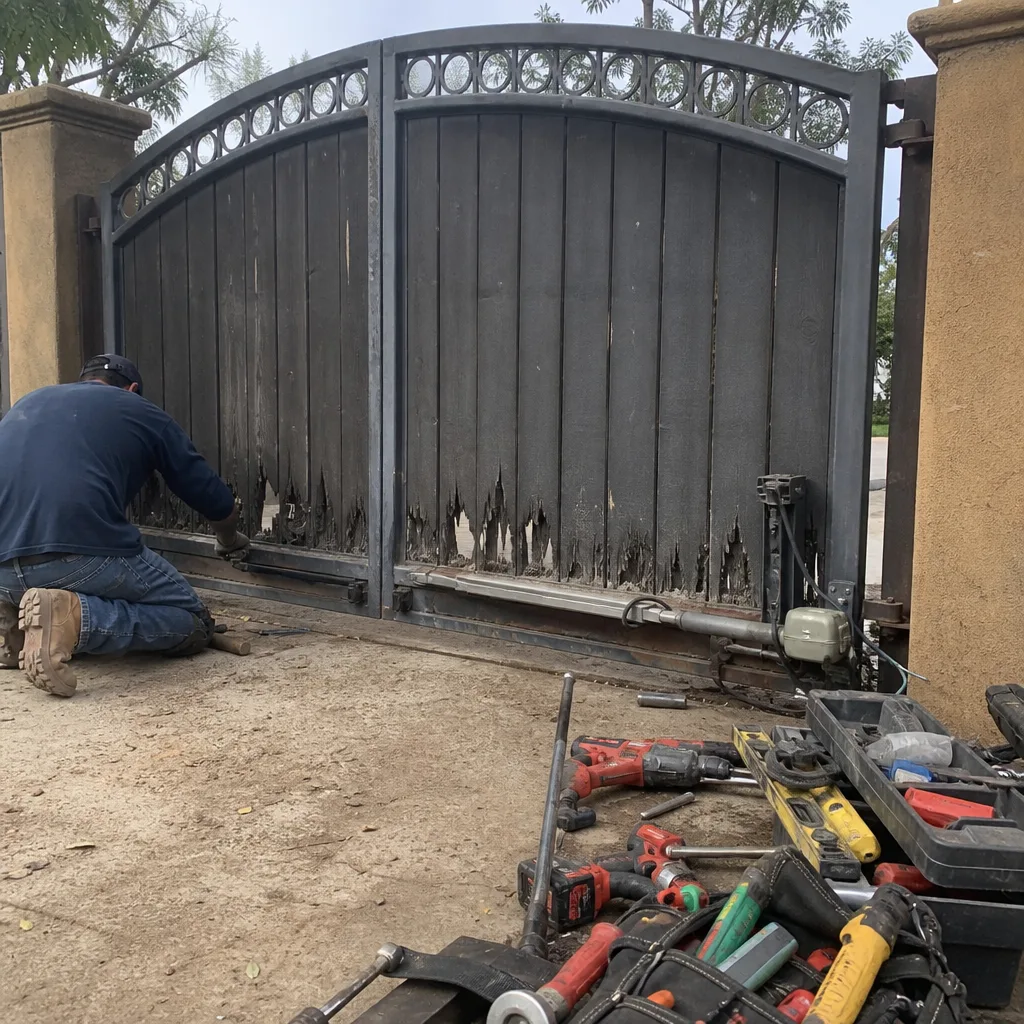 Before
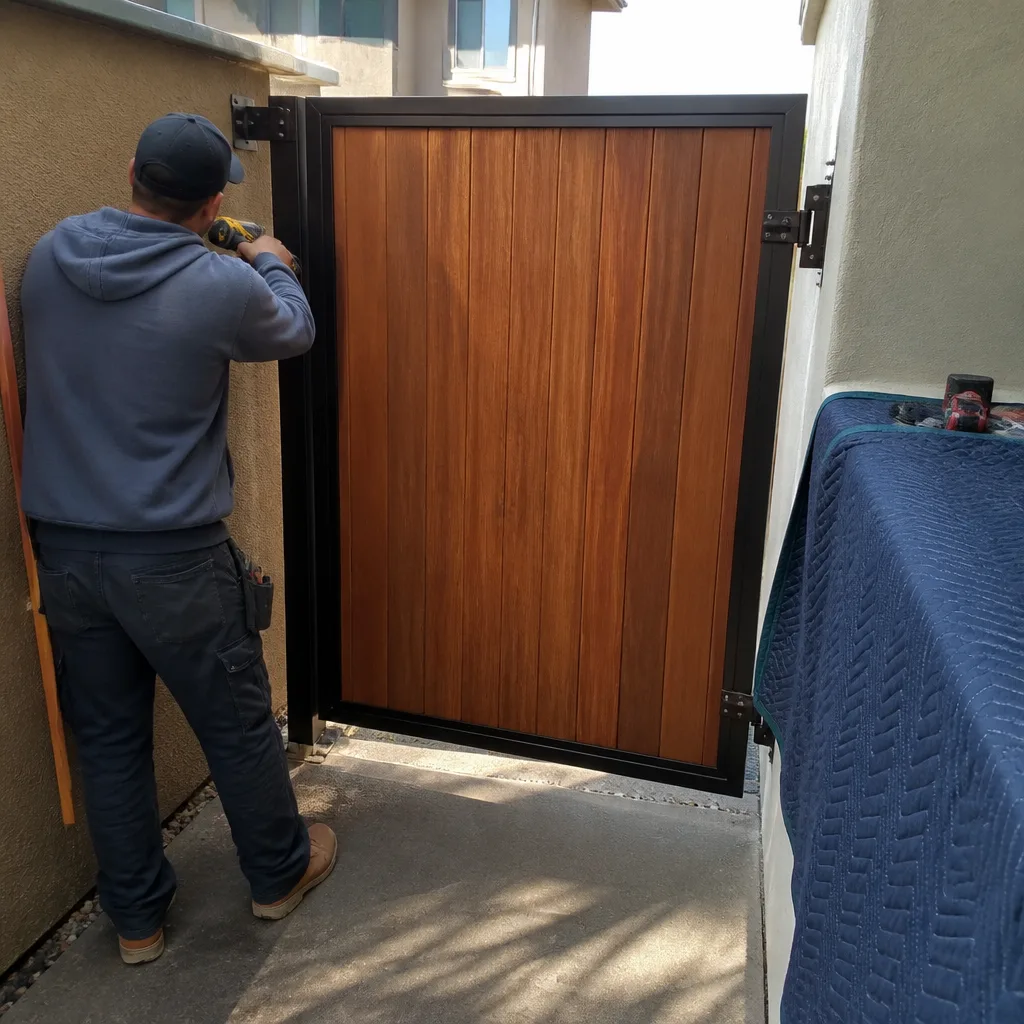 After
After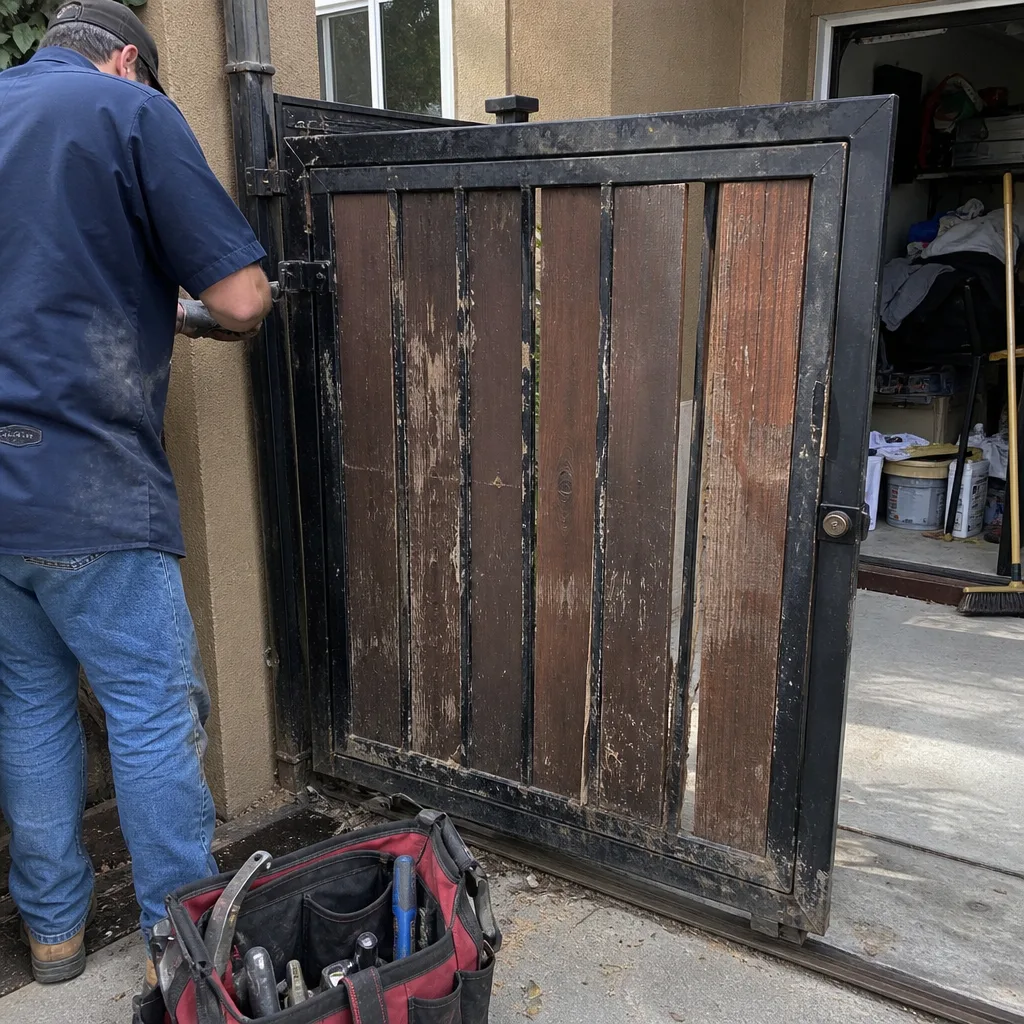 Before
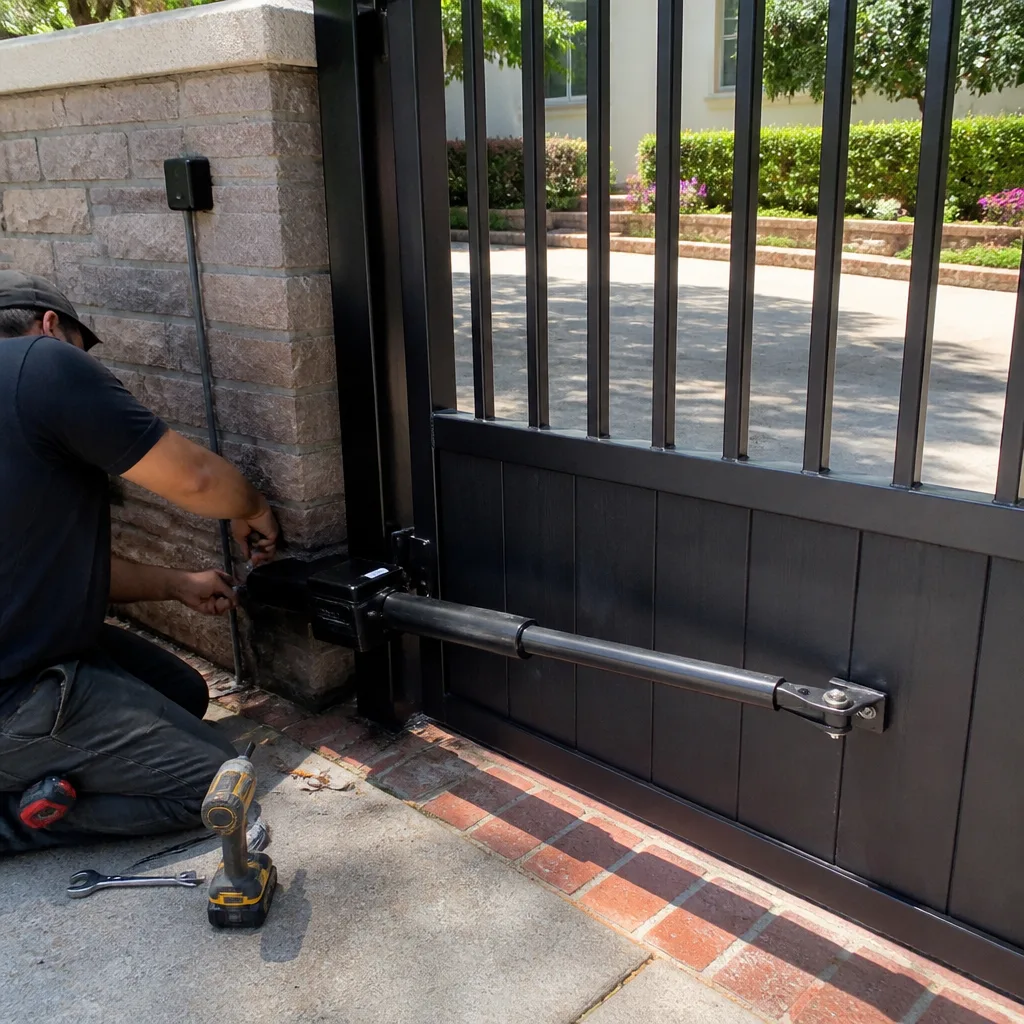 After
AfterGate Repair Maintenance Checklist for Irvine Homeowners
The most expensive gate repair we see in Irvine is almost always a small mechanical problem that a $0 monthly check would have caught. A loose chain sprocket on a slide gate becomes a shattered operator in eight weeks. A corroded photo-eye wire becomes an intermittent fault that takes three service calls to trace. This guide gives you the exact pass/fail thresholds we use on our own service visits, so you know what to measure, what it should read, and what to photograph before a minor adjustment becomes a four-figure replacement. You’ll learn which checks take five minutes with nothing but your phone camera, which ones need a volt meter, and why Irvine’s specific climate makes certain components wear faster here than they would in most of Southern California.
Quick Answer
A gate maintenance checklist only works if every item has a measurable pass/fail threshold, not a vague instruction to “inspect.” For Irvine homeowners, the essentials are monthly: confirm the gate stops and reverses under hand pressure, check chain or belt tension (no more than ½ inch of sag on a chain), verify the photo-eye alignment, and photograph any rust, wear, or change. Quarterly, test battery backup, lubricate hinges with a dry silicone spray, and listen for new sounds. Annually, have a technician measure operator force with a gate force gauge and inspect the control board for UV degradation, which Irvine’s sun accelerates on boards that sit in direct afternoon exposure.
Table of Contents
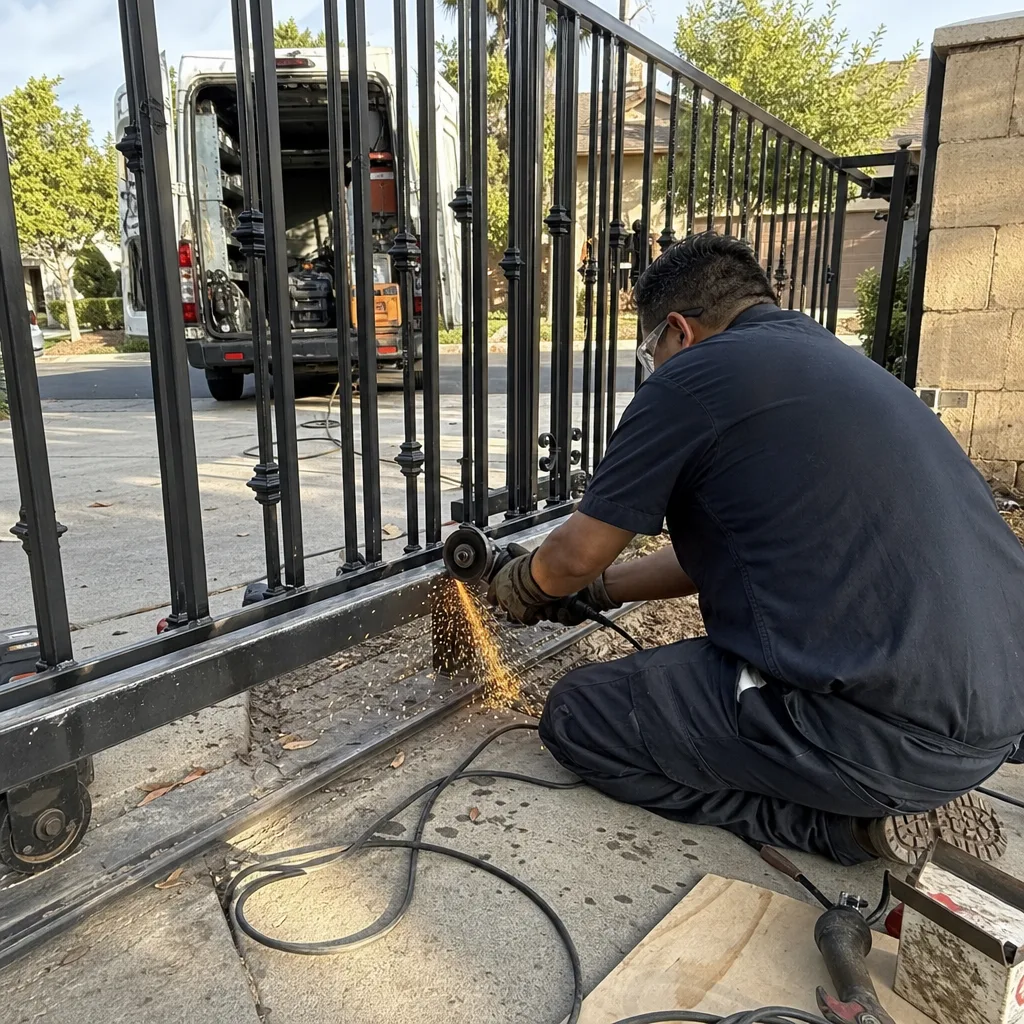
- The 10-Minute Monthly Check: What to Measure and What “Good” Looks Like
- Safety Thresholds: Force, Speed, and the Photo-Eye Test
- Irvine-Specific Wear Patterns: Sun, Soil, and Coastal Air
- What You Can Check Yourself vs. What Needs a Technician
- How to Log Maintenance with Your Phone Camera
- Printable Frequency Schedule: Monthly, Quarterly, Annually
- Common Mistakes to Avoid
- When to Call a Professional
BeforeAfterThe 10-Minute Monthly Check: What to Measure and What “Good” Looks Like
Most gate maintenance checklists fail because they use words like “inspect” and “check” without telling you what a good result looks like. That’s useless. An inspection with no pass/fail threshold is just looking at metal. Here’s what we actually measure on a monthly pass, with the exact thresholds we use in the field. Each of these takes under two minutes.
- Chain sag (slide gates only). Press down on the chain at its midpoint between the two sprockets. It should deflect no more than ½ inch. More than that means the tensioner needs adjustment. A chain running loose pulls unevenly on the operator output shaft, and that uneven load is what eventually cracks the gear inside the motor.
- Hinge play (swing gates only). Lift the gate at the latch side. Total vertical movement should be under 3mm, which is about the thickness of two stacked quarters. Play beyond that means the hinge bushings are wearing. Left alone, a dropping gate puts side-load on the operator arm and burns out the motor capacitor.
- Photo-eye alignment. Look at both photo-eye units mounted near the ground on either side of the gate opening. They should face each other squarely, with no visible angle. If either unit has shifted, the beam won’t align, and the gate may refuse to close or may stop mid-cycle. A two-inch misalignment is enough to break the beam on a bright Irvine afternoon.
- Track cleanliness (slide gates only). Run your shoe along the v-track. You’re feeling for gravel, caked dirt, or anything that makes the gate stutter. A clean track is silent. Debris in the track is the leading cause of gate jump, where the wheels skip out of the groove and the gate frame drops onto the steel.
- Battery indicator (if equipped). Most operators with battery backup have an LED status light on the control board. Green means charged. Amber or red means the battery has degraded. Irvine power outages during Santa Ana wind events are common enough that a dead backup battery is a real liability, not a theoretical one.
- Visual rust scan. Walk the full length of the gate frame. You’re looking for rust staining at weld joints, the base of pickets, and anywhere two pieces of steel overlap. Orange streaking under a powder-coated surface means the coating has failed, and once moisture gets behind it, the rust travels fast, especially in the alkaline soil dust that blows through Irvine’s common areas.
- Sound check. Run the gate through one full open and close cycle. A healthy operator hums. A grinding sound means a bearing or sprocket is failing. A clicking on startup means the capacitor is on its way out. Write down the sound in simple words and date it. That note is worth more than a hundred “sounded weird” memories six months later.
If any of these seven items fails the threshold, photograph it and address it that week. A gate that passes all seven will still occasionally need a repair, but you’ve eliminated the failures we see most often in gate repair in Irvine.
Safety Thresholds: Force, Speed, and the Photo-Eye Test
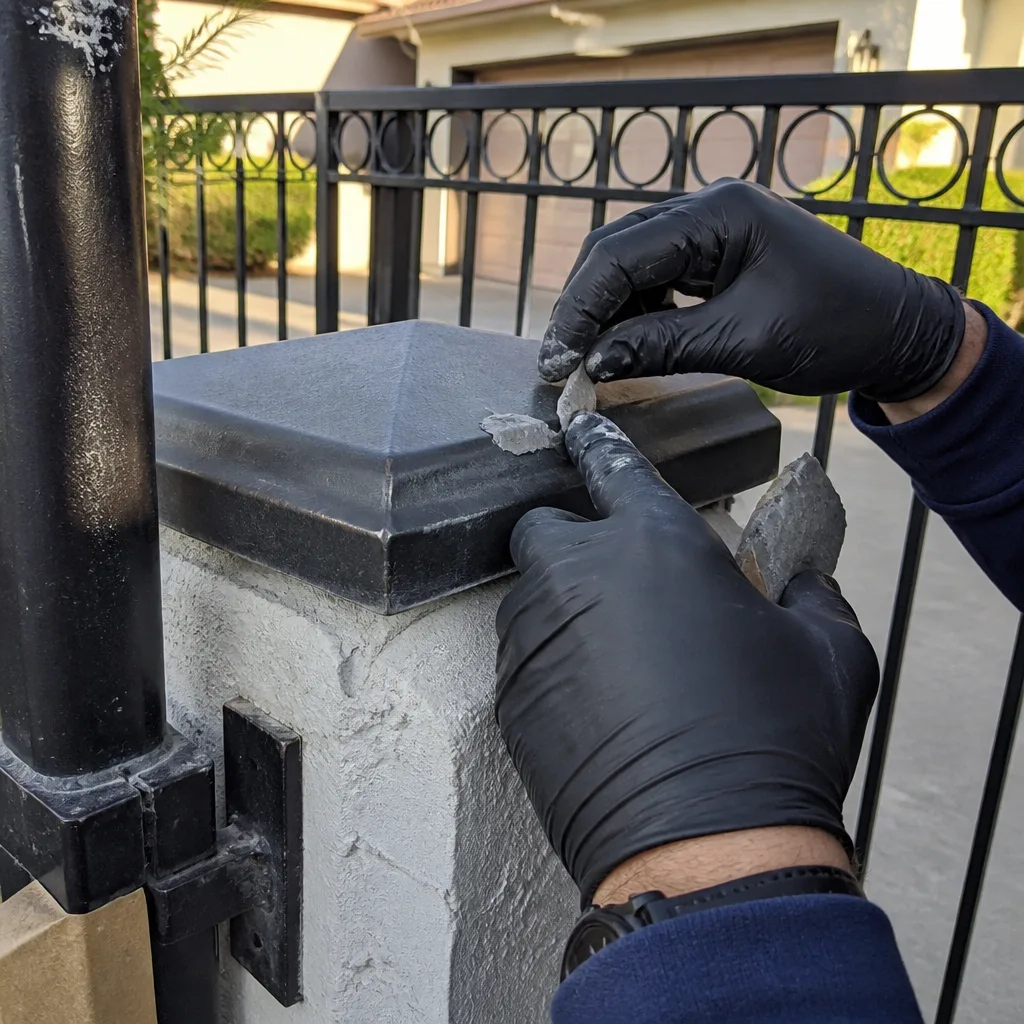
Since 2016, all automated gate operators installed in the United States have been required to comply with UL 325, the safety standard that governs entrapment protection. See our detailed breakdown of Gate Repair Permits, Codes & Inspections in CA: What You Need to Know for how this applies locally. The standard sets specific limits on how much force a gate can apply before it must reverse, how it must respond to an obstruction, and what happens when the photo-eye beam is broken. For an Irvine homeowner, these are the numbers that actually matter.
Force. A gate operator must reverse direction when it encounters an obstruction applying no more than 40 pounds of force at the leading edge. In practice, a properly adjusted residential gate reverses under hand pressure from an average adult. You can test this yourself: place your palm flat against the leading edge of the gate as it closes. It should stop and reverse with minimal resistance. If it keeps pushing hard enough that you’d want to pull your hand back, the force setting is too high. This is an adjustment a technician makes with a gate force gauge, not a guess, and it’s one of the first things we check on any service call for gate motor and opener service in Irvine.
Photo-eye test. With the gate closing, pass your foot through the beam path. The gate should stop immediately and either reverse or hold position until the beam clears. If the gate ignores the broken beam and keeps closing, the photo-eye circuit has been bypassed or the beam is out of alignment. In Irvine, where sun glare at low afternoon angles can wash out an infrared beam, we often see photo-eyes that work perfectly at 9 a.m. and fail at 4 p.m. That’s a solar alignment problem, and it’s why we photograph the beam alignment at the exact time of day the failure happens.
Speed. A residential swing gate should traverse its full arc in roughly 12 to 15 seconds. A slide gate typically takes 10 to 14 seconds to travel a 12-foot opening. Gates that run significantly faster than that are usually running on a commercial speed setting, which is fine for a warehouse but not for a driveway where kids and pets are present. The operator’s control board has speed dip switches or a potentiometer. We set it once and photograph the setting so it never drifts.
One more point worth keeping in mind: a gate that passes all three safety tests today can fail one of them next month. Components age. Springs fatigue. Capacitors drift. That’s why these thresholds are part of a monthly check, not a one-time setup.
Irvine-Specific Wear Patterns: Sun, Soil, and Coastal Air
Irvine is not a hard climate by national standards. No snow, no deep freezes, no hurricane-force rain. But it has three specific environmental factors that create predictable wear patterns on gate equipment, and any maintenance checklist for an Irvine homeowner has to account for them.
UV degradation on control boards and plastics. Irvine averages 280 sunny days a year. Control boards mounted in a metal enclosure absorb heat all afternoon, and the enclosure itself can reach 140 degrees in direct summer sun. Circuit boards don’t fail from UV hitting them directly; they fail from heat cycling. Every day the board expands and contracts, and eventually a solder joint cracks or a capacitor dries out. This is the most common non-mechanical failure we replace on Irvine gates that have been in service seven or more years. The telltale: intermittent behavior that comes and goes with temperature. Gate works in the morning, refuses to respond at 3 p.m., works again after sundown. That’s heat-related board failure, not a ghost.
Alkaline soil corrosion. Much of Irvine sits on alkaline soil, and the dust that blows through open lots and construction areas is full of mineral salts. That dust settles on exposed gate hardware and, combined with morning dew, creates a mild corrosive solution. We see faster rust on steel gates in Irvine than in beach cities ten miles west, because the beach cities get washed by marine air while Irvine gets baked with alkaline dust. Buried conduit is a bigger problem: PVC conduit joints that weren’t solvent-welded properly let alkaline soil water seep in, and the wire inside eventually corrodes at the low point. That’s a service call we make regularly, and the fix is pulling new wire, not patching old insulation.
Salt-air creep near Newport Coast. The southwestern edge of Irvine, near the 73 and the Newport Coast boundary, gets a measurable salt-air effect on clear mornings. It’s not enough to eat through a galvanized gate in three years, but it’s enough to accelerate rust on any scratch or weld seam. Gates in Quail Hill, Shady Canyon, and Turtle Ridge show rust earlier than gates in Northwood or Woodbury. The pattern is consistent enough that we recommend a six-month rust scan for any gate within three miles of the coast.
The practical takeaway: put “UV check” and “salt-air proximity” on your maintenance calendar if they apply, and don’t treat a maintenance schedule written for a Phoenix or San Diego homeowner as interchangeable with one for Irvine.
What You Can Check Yourself vs. What Needs a Technician
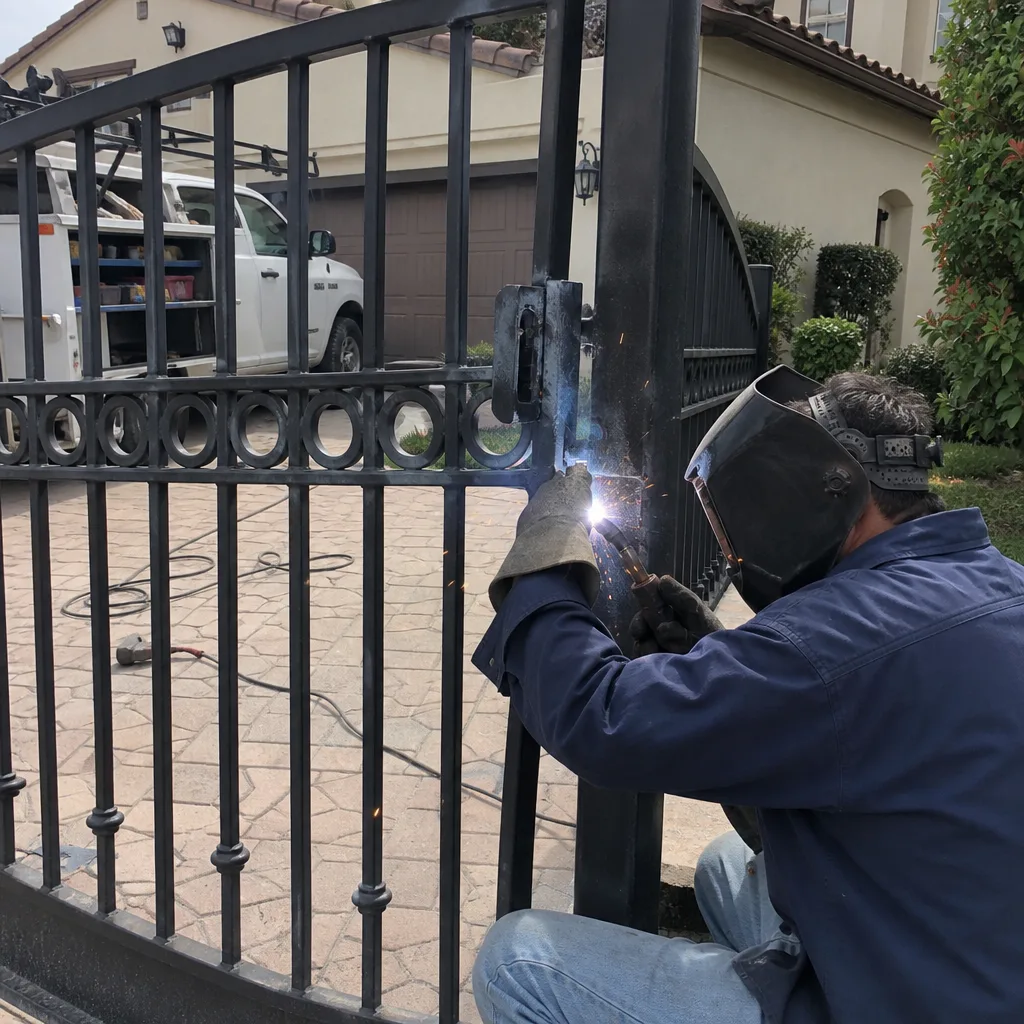
We believe an informed homeowner should handle the cheap, frequent checks and leave the dangerous or instrument-dependent work to someone with the right tools. Here’s the split.
Safe to do yourself, monthly:
- Chain sag measurement with your hand
- Hinge play check by lifting the gate
- Photo-eye visual alignment check
- Track debris check
- Rust scan and photo documentation
- Battery LED status read
- Sound check during a full cycle
- Photo-eye beam-break test with your foot
None of those require tools, and none of them put you in contact with moving components under tension.
Requires a technician with proper instruments:
- Operator force measurement with a gate force gauge (this is a UL 325 compliance item, not a “feels fine” item)
- Torsion spring replacement on any gate that uses a spring-assisted hinge system
- Control board voltage testing and diagnosis
- Chain sprocket replacement on a slide gate operator
- Capacitor replacement or any work inside the operator housing
- Photo-eye wiring repair or re-termination
- Buried conduit inspection and wire-pull work
A note on that first item. The force gauge exists because human hands are bad at measuring force. What feels like “a little strong” to a 200-pound adult is an entrapment hazard to a 40-pound child or a dog. We carry a calibrated force gauge on every service visit, and the reading goes in the photo log. That’s not a company policy detail worth skipping. It’s a safety measurement with a legal standard attached, and “it felt okay” doesn’t hold up in any inspection or insurance review.
How to Log Maintenance with Your Phone Camera
Every homeowner in Irvine has a phone with a camera, and that camera is the single best maintenance tool you own. A dated photo log does three things. It establishes a baseline so you can compare month to month. It creates a record that protects you if a contractor later claims pre-existing damage. And it gives a repair technician something concrete to work from instead of a verbal description of a sound you heard three weeks ago.
Here’s the exact routine we recommend, and the one we use on our own service visits.
- Photograph the same six positions every time. Full gate from 15 feet back (front view), full gate from the motor side, left hinge close-up, right hinge or roller close-up, chain or belt tension view, and the operator housing with the panel open showing the control board. Six photos, same order, every time.
- Use your phone’s filename or gallery note feature to add the date. Most modern phone galleries let you add a caption or save to a named album. Create an album called “Gate Log” and save every gate photo there. The photo’s time stamp is automatic.
- Photograph problems at two distances. One wide shot showing where the problem is on the gate, and one close shot showing the issue itself. The wide shot gives context. The close shot gives the detail a future technician needs to see before they arrive.
- Take a short video of the gate cycling if it’s making a sound. Ten seconds of video captures a sound more accurately than a verbal description ever will. We’ve diagnosed failing bearings from a 10-second phone video more than once.
- Photograph paperwork and receipts. Any quote, any invoice, any part number. If you had work done and the technician wrote the part number on the invoice, photograph that line. You’d be surprised how many homeowners can’t tell us what motor they have when we ask over the phone.
This photo-log habit is the homeowner version of a practice we’ve used since 2014: every visit we make to an Irvine gate includes a documented photo record of what was found, what was adjusted, and what was replaced. We leave the photos with the homeowner and file them in the job record. When the next repair comes, no one has to guess what was done last time. Your own gate log should work the same way.
Printable Frequency Schedule: Monthly, Quarterly, Annually
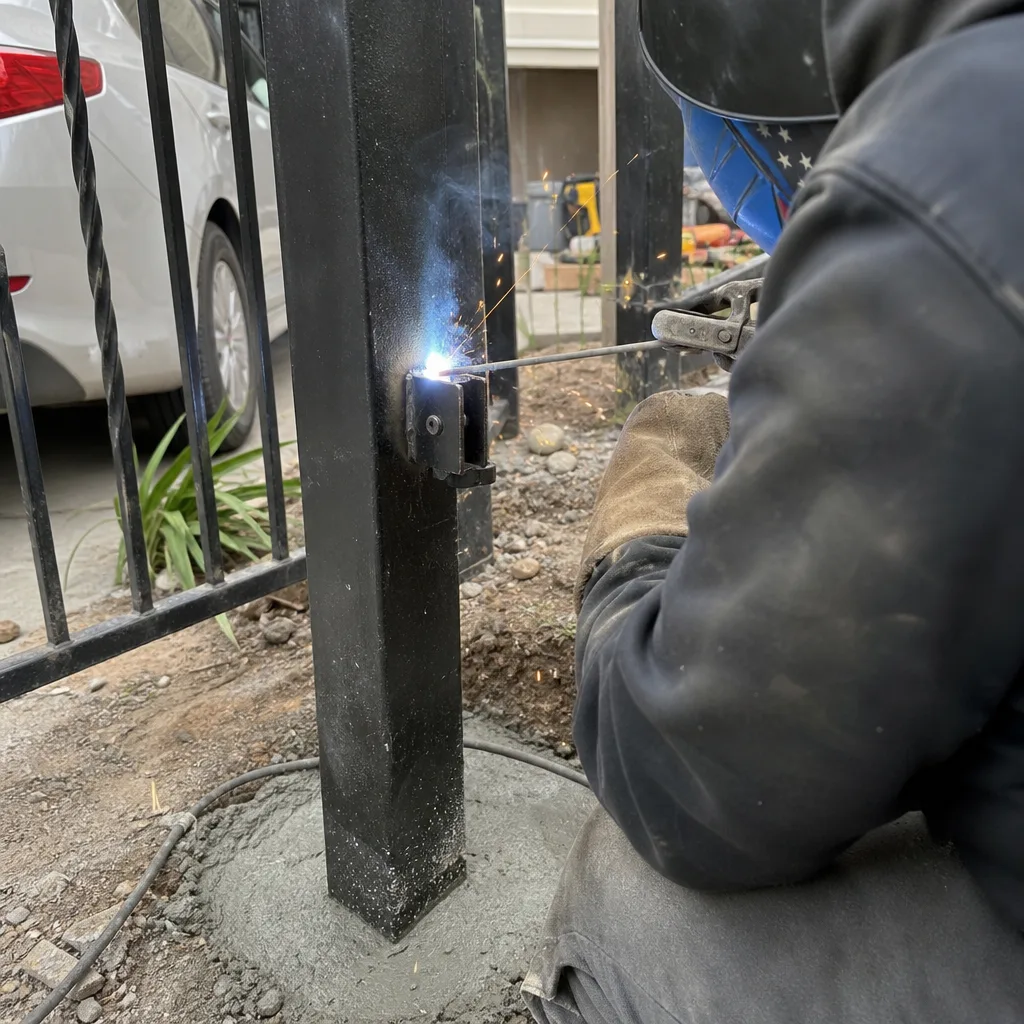
The intervals below aren’t arbitrary. Each one is set by how fast the relevant component actually wears or drifts in Irvine’s climate.
Monthly (10 minutes)
- Chain sag measurement (slide gates): no more than ½ inch of deflection
- Hinge play check (swing gates): under 3mm of vertical lift
- Photo-eye alignment check
- Track debris check (slide gates)
- Rust scan: weld joints, picket bases, overlap seams
- Battery backup LED status
- Sound check: one full open/close cycle
- Force test: palm on the leading edge, gate should reverse
Why monthly: Chain tension drifts in weeks, not months, on a gate that cycles 10 to 20 times a day. A photo-eye knocked out of alignment by a landscape crew or a stray basketball needs to be caught early, because a misaligned beam often means the gate refuses to close, which means security is compromised every night until it’s fixed.
Quarterly (30 minutes)
- Lubricate hinge pins and roller bearings with dry silicone spray (never WD-40, which leaves a sticky film that collects dust)
- Inspect the operator housing for spider nests, rodent activity, and ants
- Check battery electrolyte level if the system uses a flooded lead-acid backup battery
- Inspect power cord and conduit for cracking, especially where conduit meets the operator
- Re-torque any visible bolts on the gate frame and operator mount (hand-tight with a wrench, no power tools)
- Review your photo log from the last three months and look for gradual changes
Why quarterly: Lubricant wears off or dries out on roughly a three-month cycle in Irvine’s heat and dust. Ants are a predictable problem in Irvine; they nest inside operator housings and short out control boards. Bolts on a moving gate work loose from vibration, and three months is about how long it takes for a partially tightened bolt to become a fully loose one.
Annually (technician visit)
- Operator force measurement with a calibrated gate force gauge
- Photo-eye alignment verification with a manufacturer’s test, not a visual glance
- Control board inspection for heat damage, swollen capacitors, and corroded terminals
- Chain sprocket and idler pulley inspection for wear patterns
- Full travel adjustment: limit switches, slow-down points, and stop positions
- Battery load test (a battery can show green on the LED and still fail a load test)
- Weld seam inspection on the gate frame
- Ground rod and bonding verification if the operator is on a dedicated circuit
Why annually: The force gauge is a professional instrument that costs more than a service call; there’s no reason to own one. Control boards degrade over 12-month heat cycles in Irvine, and an annual visual inspection catches a swelling capacitor before it blows. Limit switches drift, and a gate that over-travels by two inches every month will eventually slam into its end-stop or tear a hinge. None of these failures give you a warning sound. They show up on a gauge or a visual inspection, which is why the annual visit exists.
If you want a second set of eyes on any maintenance item, Vance Gate Repair Irvine offers gate installation in Irvine and maintenance services with a written report on every visit. The report includes the measurements, not just the conclusion.
Common Mistakes to Avoid
- Using WD-40 on anything that moves. WD-40 is a solvent, not a lubricant. It strips existing lubrication and leaves a sticky residue that collects Irvine’s alkaline dust. Use a dry silicone spray for hinges and rollers. This one mistake causes more repeat wear than any other homeowner maintenance choice.
- Testing the photo-eye by looking at the little red light. The LED on a photo-eye unit tells you it has power. It does not tell you the beam is aligned. We’ve seen photo-eyes with a steady green “ready” light that were misaligned by four inches. Test with your foot in the beam path, not your eyes on the LED.
- Adjusting chain tension without loosening the motor mount. On most slide gate operators, the chain is tensioned by moving the operator, not by pulling the chain tighter with a tool. If the chain is too tight, it side-loads the output shaft and destroys the gear reduction inside the operator. A chain should have ½ inch of sag, not be pulled taut.
- Ignoring a gate that’s “a little slow” in one direction. A gate that travels slower closing than opening usually has a binding hinge, a failing capacitor, or a low-voltage condition at the operator. None of those fix themselves. All of them become a full no-operation failure if ignored long enough.
- Disabling the photo-eye or force reverse because the gate “kept stopping.” This is the most dangerous thing a homeowner can do to an automated gate. The photo-eye and force reverse exist to prevent the gate from crushing a person or pet. When a homeowner bypasses them to make the gate close, they’re trading a $200 adjustment for a liability that far exceeds the value of the gate. We will not work on a gate where the safety devices have been deliberately disabled unless we’re restoring them.
- Leaving the battery backup disconnected because “the power never goes out here.” Irvine loses power during Santa Ana wind events and during the occasional rolling outage. A gate without battery backup becomes a manual push-open gate in an outage. For a slide gate, that’s not easy. Reconnect the battery and set a quarterly reminder to check it.
- Replacing an operator before checking the simple stuff. We see operators replaced because of a failed photo-eye, a dead capacitor, or a corroded wire connection. Before authorizing an operator replacement, get a written diagnosis. A good technician will show you the failed component, not just tell you the motor is “bad.”
When to Call a Professional
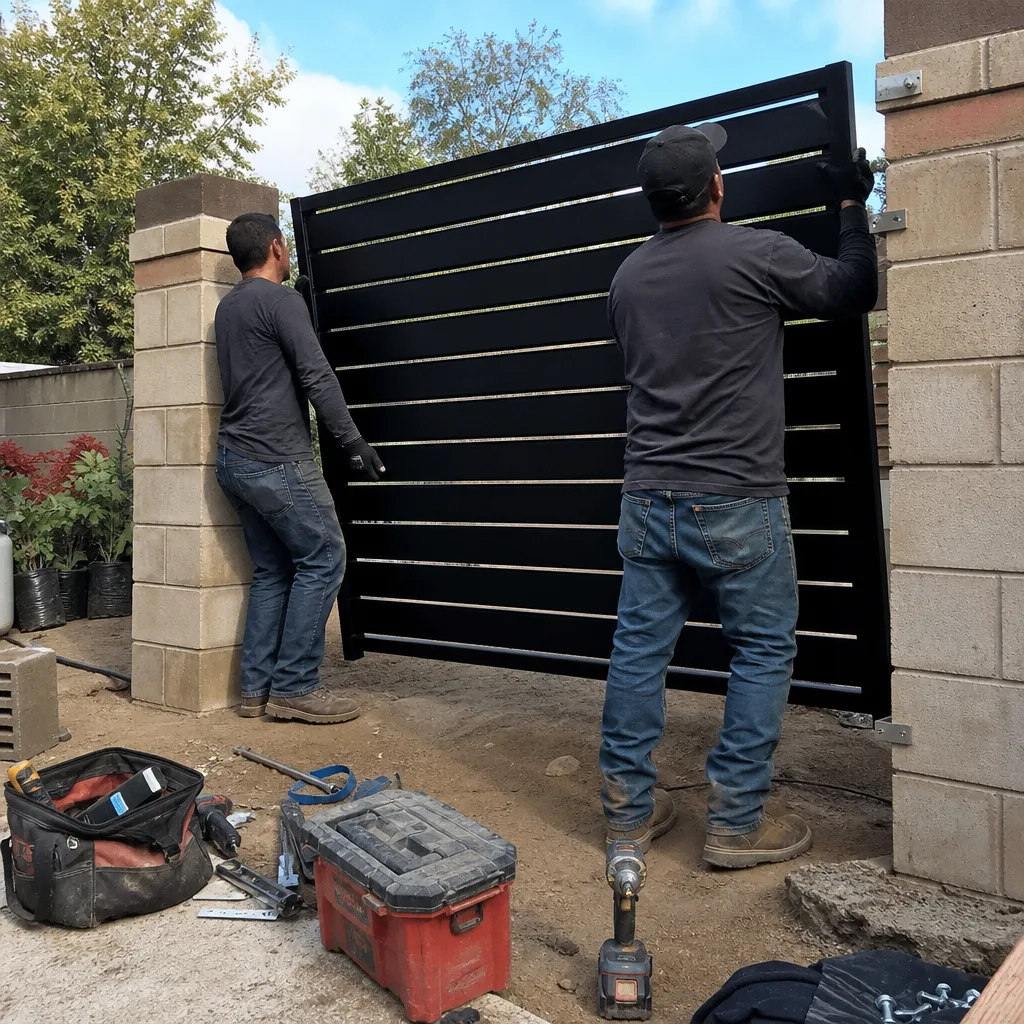
Some gate problems are safe to diagnose yourself, and some are not. Call a professional when the gate makes contact with anything it shouldn’t, when the operator hums but doesn’t move, when the gate reverses before reaching its full open or closed position, when the force test fails, or when you see exposed wiring, sparking, or a burning smell from the operator housing. Torsion springs on spring-assisted gates carry stored energy and should never be replaced by someone who doesn’t work with them regularly. A gate that has come off its track is heavy enough to cause serious injury if it falls while someone is trying to lift it back on. Vance Gate Repair Irvine offers free estimates in Irvine, and a written price is delivered before any work starts. Call (657) 258-2588 and a live person answers, any hour, any day.
Frequently Asked Questions
Monthly for the quick measurement checks, quarterly for lubrication and bolt inspection, and annually for a technician visit with a force gauge. A gate that cycles 15 times a day runs about 5,475 cycles a year. Components wear on cycles, not calendar months, so the intervals above assume average residential use. A gate with heavier traffic or one near coastal air on the Irvine-Newport border should move the annual visit to every nine months.
For the monthly checks described in this guide, you need no tools at all: your hands, your eyes, and your phone camera. For quarterly maintenance, a set of combination wrenches, a dry silicone spray, and a clean rag covers almost everything a homeowner should do. A gate force gauge, a multimeter, and a capacitor tester are professional instruments. If a task requires those, it’s a job for a technician.
An annual maintenance visit, including force measurement, limit-switch adjustment, lubrication, and a written report, typically runs between $150 and $300 in Irvine depending on the gate type and operator brand. A Viking or DoorKing slide gate operator takes longer to service than a basic Mighty Mule swing gate, and that’s reflected in the price. The cost of a single prevented repair, say a chain sprocket caught before it destroys the operator, is typically $600 to $1,200 more than a maintenance visit. Call (657) 258-2588 for an exact quote. Estimates are free, and the price you’re quoted is the price you pay.
Yes. Slide gates need chain or belt tension checks, track inspection, and v-wheel bearing lubrication. Swing gates need hinge play measurement, latch alignment, and operator-arm travel verification. Both need photo-eye testing and force verification. A homeowner with a slide gate should never skip the monthly track check; a homeowner with a swing gate should never skip the monthly hinge-lift check.
Technically yes, but you’ll be responsible for the UL 325 entrapment protection setup, and if the installation is not done to standard, the gate can pose a serious safety hazard. Operator installation involves line-voltage wiring, photo-eye alignment, force adjustment, and limit-setting. Each of those has a measurable threshold, and the force adjustment requires a gauge that most homeowners don’t own. If you’re determined to DIY it, install the mechanical hardware and have a professional do the wiring and safety adjustments. At minimum, get the force verified.
Irvine’s heat and sun accelerate control board aging, which means control boards should be visually inspected every 12 months for swollen capacitors. The alkaline dust blows into bearings and rollers, so quarterly lubrication matters here more than in coastal towns. And homes in the southwestern part of Irvine, within a few miles of Newport Coast, get enough salt air that a six-month rust scan is the smarter interval. Gates in Woodbury or Northpark, farther from the coast and on newer construction, can stick to the standard schedule.
The Bottom Line
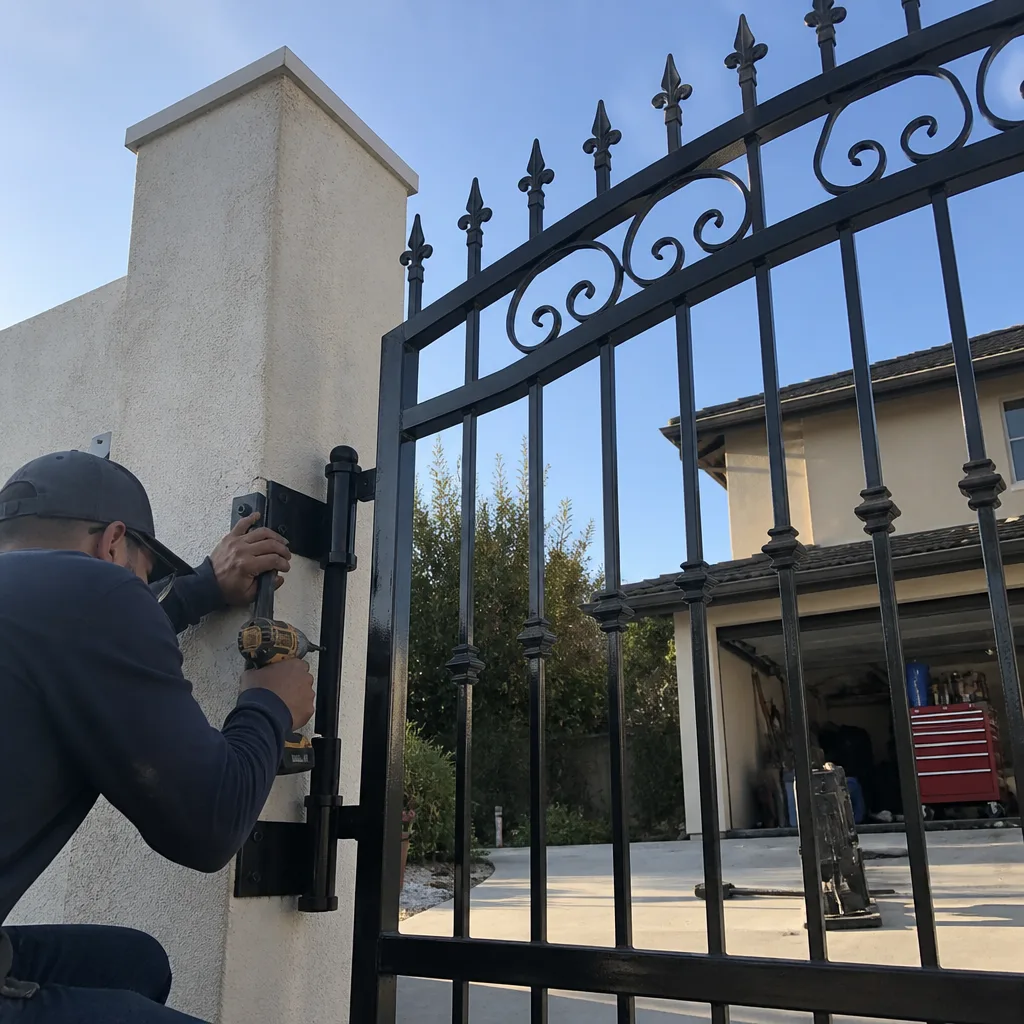
A maintenance checklist without measurements is a list of good intentions. Every item on your gate maintenance schedule should have a number attached: ½ inch of chain sag, 3mm of hinge play, 40 pounds of maximum force, 12 to 15 seconds of travel. Take six photos every month, log them in a dated album, and review the record quarterly. Do the monthly checks yourself, call a technician for anything involving force measurement or internal operator work, and don’t let a small problem run for eight weeks because it “looks fine.” A $0 monthly check that catches a loose chain sprocket will save you a $900 operator replacement, and that math holds up in every Irvine neighborhood from Northwood to Quail Hill.
If you’re looking for a professional gate maintenance partner in Irvine, Vance Gate Repair Irvine serves the area with a written price before work starts and a documented photo record on every visit. Explore our more guides & resources for additional homeowner tips. Call (657) 258-2588 to schedule.
Written by Adrian Vance, Owner at Vance Gate Repair Irvine, serving Irvine since 2014.