
Last updated September 20, 2026
Free on-site gate assessment - hinges, posts, and your LiftMaster or Nice gate operator checked before anything is quoted
The assessment is free and the quote is the invoice.
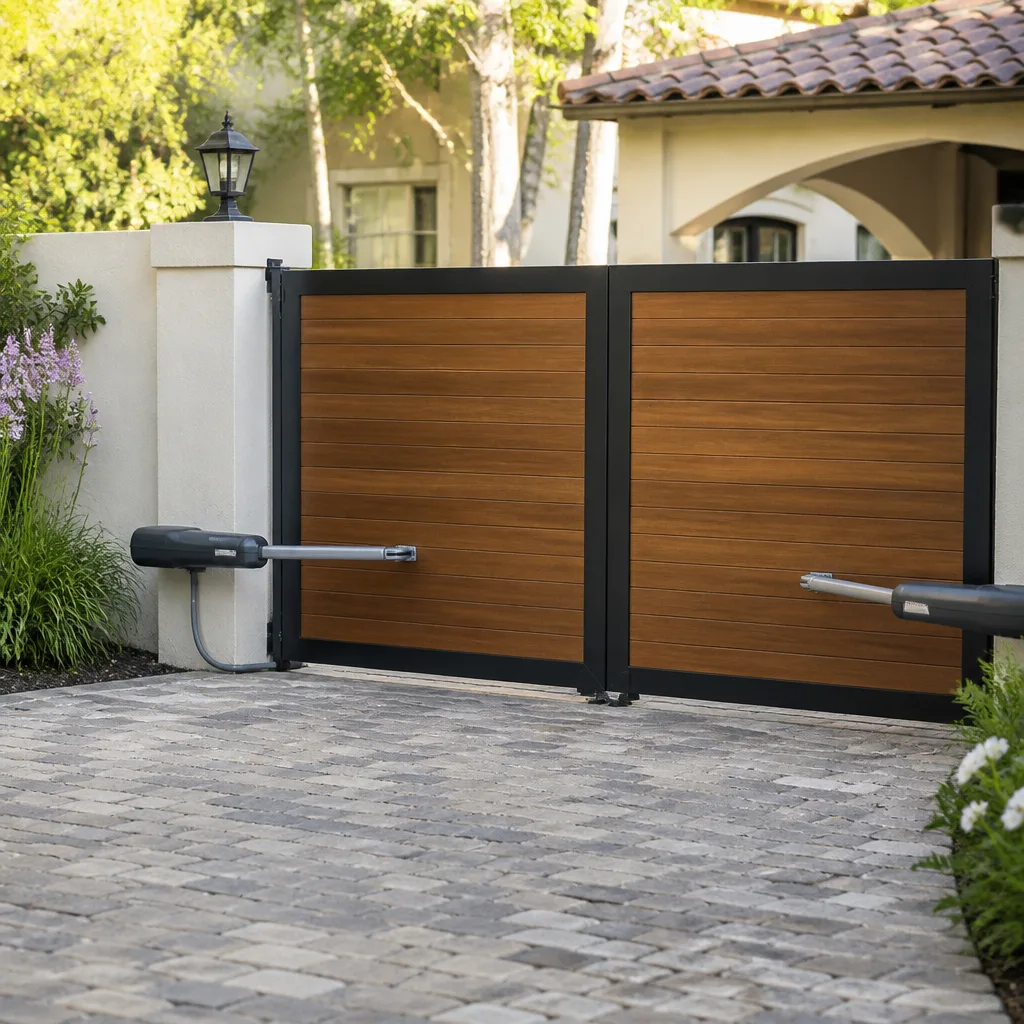
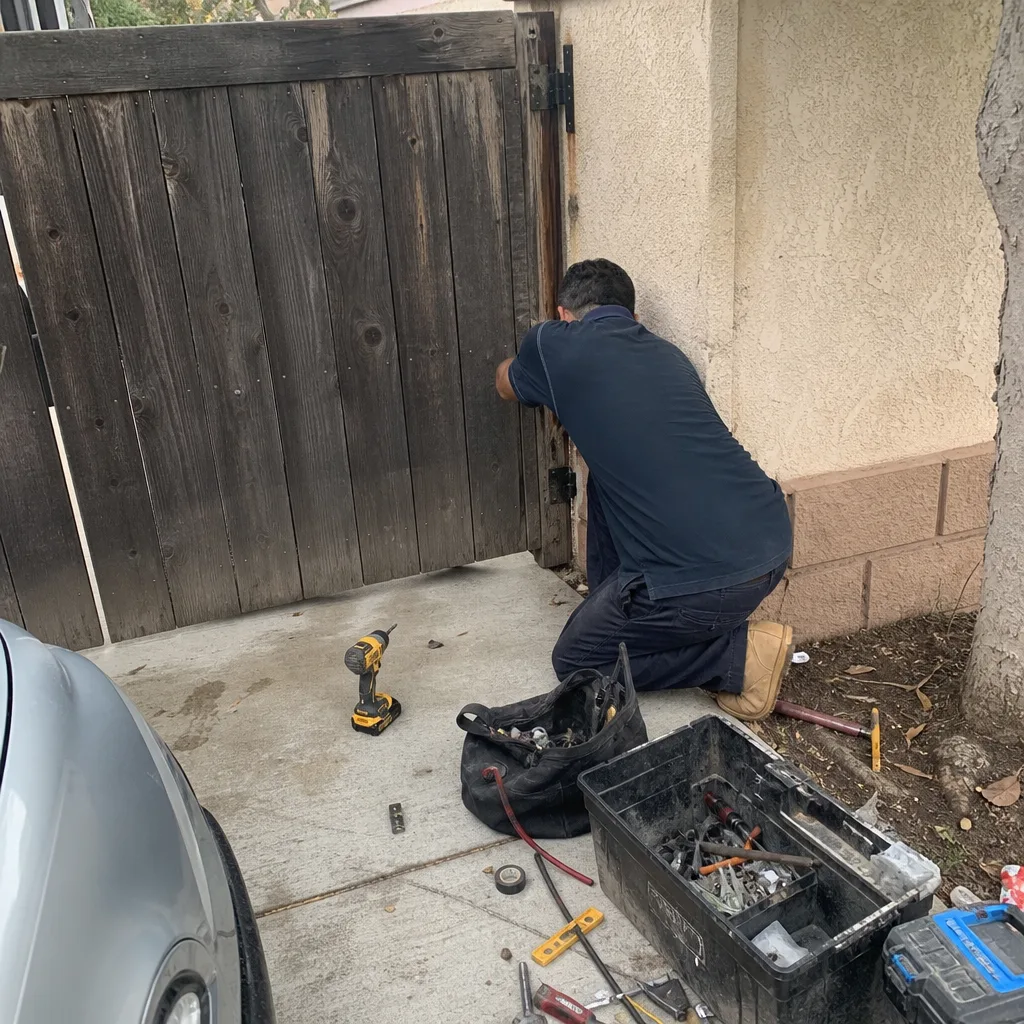 Before
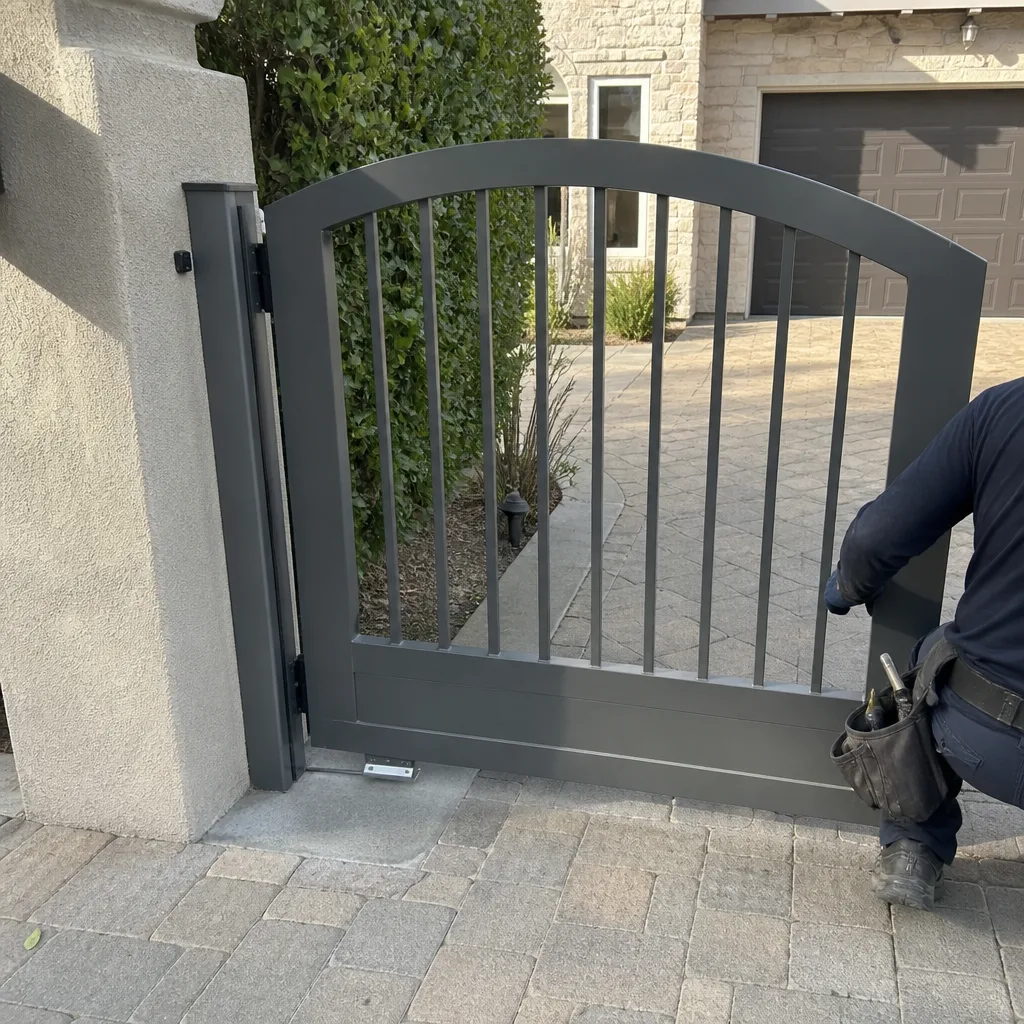 After
After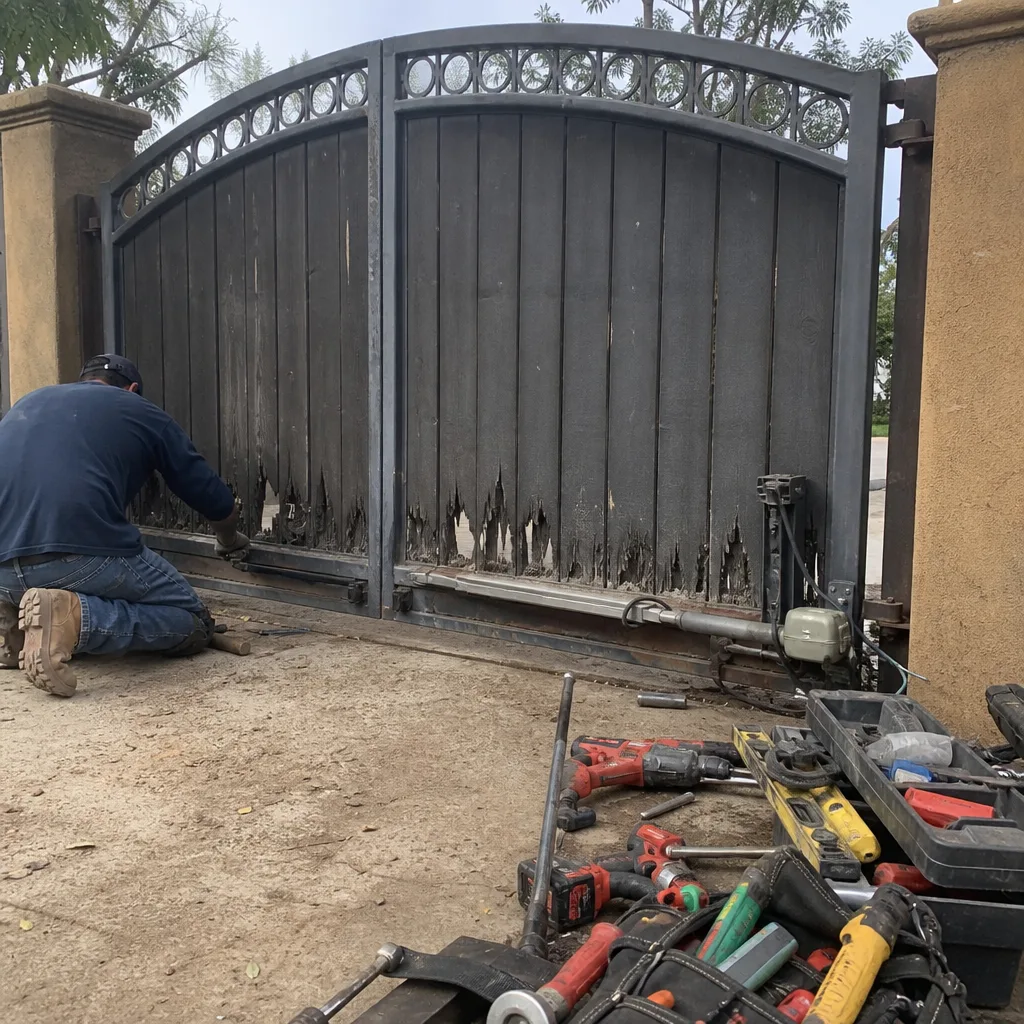 Before
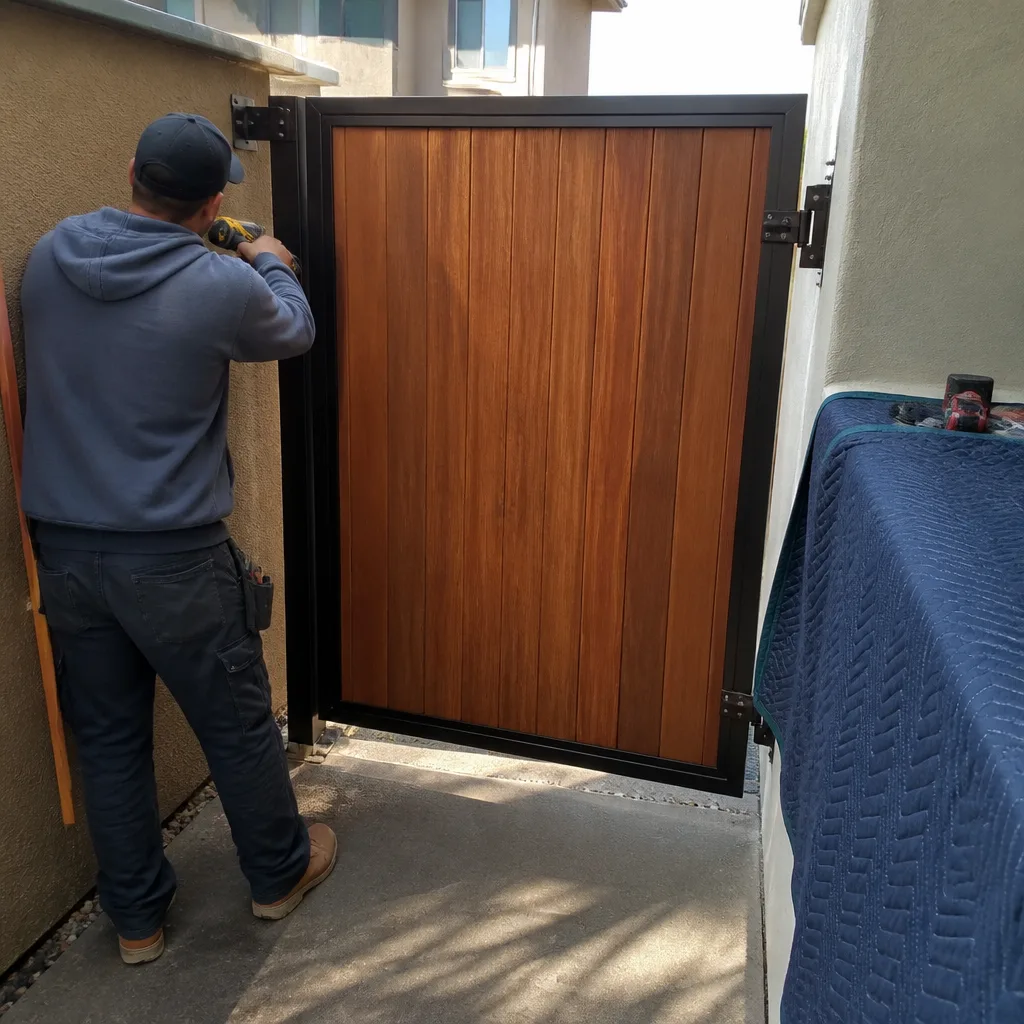 After
After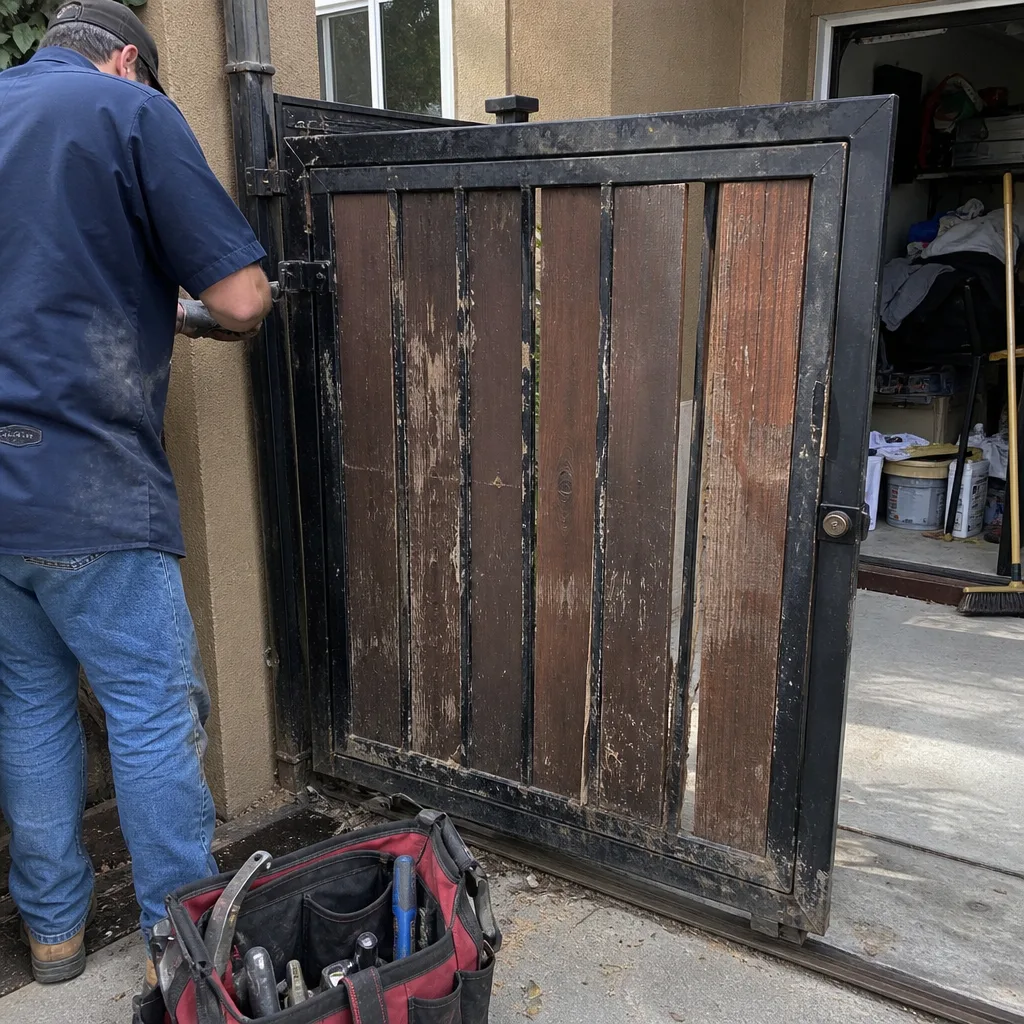 Before
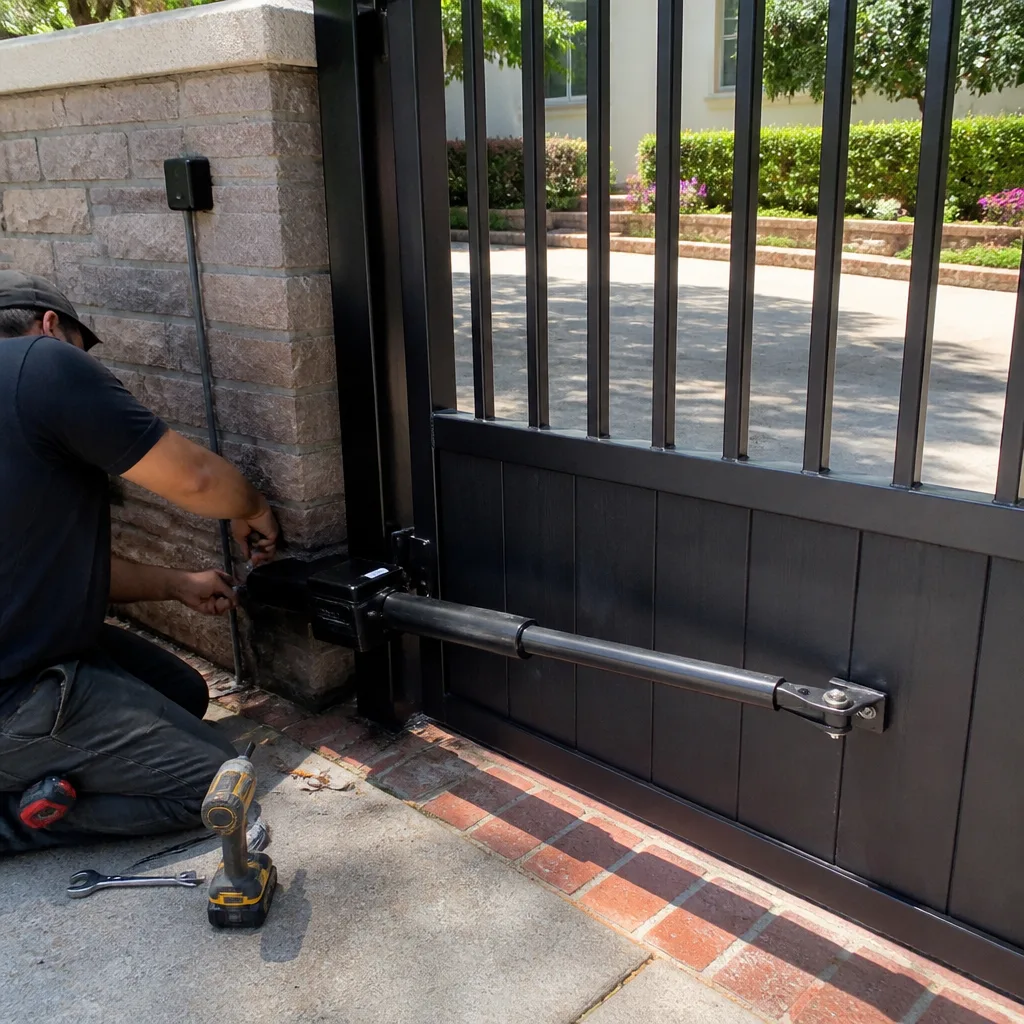 After
AfterSeasonal Gate Repair Care for Irvine: Year-Round Homeowner’s Guide
Gate operators in Irvine don’t fail randomly. They fail in clusters, and those clusters track specific weather events. A heat wave in September takes out control boards. A Santa Ana wind event in November throws gates out of alignment. A damp December morning fogs photocell lenses and confuses limit switches. Most homeowners don’t notice the pattern because they only look at their gate when it stops working. This guide breaks down what actually degrades gate hardware in Irvine’s climate, when to check it, and what to photograph so you catch wear before it becomes a breakdown. If you’d rather skip the diagnostic theory and just get someone out to look, our Irvine gate repair page covers what a service visit includes.
Quick Answer
Seasonal gate care in Irvine means checking three things at three specific times of year: control board capacitors before and after late-summer heat peaks, hinge and track fasteners during Santa Ana wind months (October through December, again February through March), and limit switches and photocell lenses during winter condensation cycles. A ten-minute visual inspection and a dated photograph at each checkpoint will catch most failures before they strand you outside your own driveway.
Table of Contents
- Why Irvine’s Climate Breaks Gates Differently Than Other Southern California Cities
- Late-Summer Heat Peaks: What Overheating Does to Control Boards
- Santa Ana Winds: Irvine’s Peak Gate Misalignment Season
- Winter Condensation: Limit Switches, Photocells, and the Marine Layer
- The Irvine Month-by-Month Gate Intervention Calendar
- How to Photograph and Date Your Gate Hardware for a Longitudinal Record
- What to Check on LiftMaster, Ghost Controls, and Viking Motors in Irvine
- Common Mistakes to Avoid
- When to Call a Professional
- Frequently Asked Questions
- The Bottom Line
BeforeAfterWhy Irvine’s Climate Breaks Gates Differently Than Other Southern California Cities
Irvine sits roughly eight miles inland from the Pacific, which puts it in a specific thermal band that most homeowners don’t think about until a gate motor quits. Unlike coastal Newport Beach, Irvine doesn’t get the full marine-layer buffer in summer. Unlike inland Riverside, Irvine doesn’t get the extreme overnight temperature swings that crack plastic housings. What Irvine gets is a specific combination: sustained daytime heat above 90°F from July through September, a winter condensation cycle driven by morning marine air that burns off by 10 a.m., and Santa Ana wind events that arrive with almost no warning and gust hard enough to move a 600-pound gate off its track.
Those three conditions target three different components. Heat kills electrolytic capacitors on control boards. Moisture fogs photocell lenses and corrodes limit switch contacts. Wind loosens hinge bolts, bends track brackets, and forces the operator to work against a gate that’s no longer moving freely. Most gate failures in Irvine trace back to one of those three mechanisms, even if the homeowner first notices the failure weeks after the weather event that caused it.
This matters because the standard advice you’ll find on generic gate-maintenance pages and more guides & resources, like “lubricate the hinges in spring,” doesn’t map to Irvine’s actual stress calendar. Our climate doesn’t have a spring. It has a wet season, a heat season, and two wind seasons. The maintenance schedule that prevents failures here runs on those periods, not on the four seasons a national website uses.
Late-Summer Heat Peaks: What Overheating Does to Control Boards
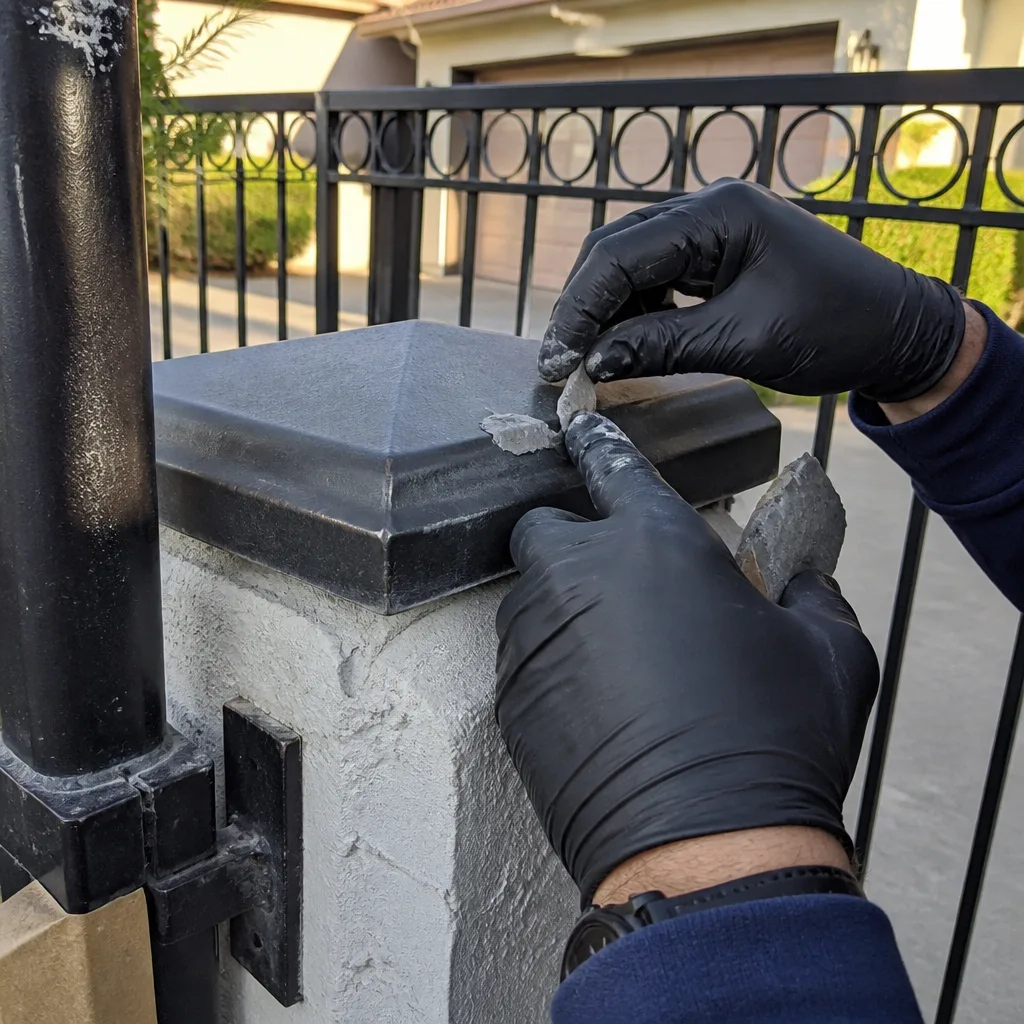
August and September are the months we get the most control-board failure calls in Irvine. The pattern is consistent: a stretch of days above 95°F, then a gate that opens but won’t close, or closes but won’t open, or intermittently refuses to respond to the remote. The homeowner assumes the motor burned out. More often, the motor is fine and the board is the problem.
Here’s what’s happening inside the control box. Every gate control board has electrolytic capacitors, small cylindrical components that smooth voltage and buffer the board against power fluctuations. Electrolytic capacitors have a rated lifespan measured in hours at a given temperature. The rating assumes an operating environment around 65°F. For every 10°F above that, the capacitor’s effective lifespan drops by roughly half. A control box mounted on a south-facing wall or pillar in Irvine can reach 130°F inside during an August afternoon. A capacitor rated for 10,000 hours at rated temperature can degrade within two summers of sustained exposure.
The capacitor doesn’t usually fail all at once. It bulges first. The top of the cylinder domes slightly, or a small amount of electrolyte seeps from the base. The board still works, but erratically. That’s the window where intervention is cheap and fast. Replace the capacitor and the board usually keeps working for years. Wait until the capacitor vents completely and you’re replacing the whole board, which typically runs between $300 and $600 in parts depending on the motor brand.
What to Check Before and After a Heat Wave
- Open the control box. If you don’t know where it is, follow the power conduit from the motor. It’s a metal or plastic enclosure, usually mounted near the gate post.
- Look at the capacitors. You’re looking for cylinders with a domed top, a bulging side, or a brownish residue at the base. A healthy capacitor is flat-topped and clean.
- Photograph the board. Even if everything looks fine, a dated photo gives you a baseline. Next August, you can compare and see if anything has changed.
- Check the control box’s shade situation. If the box sits in direct afternoon sun, consider a shade panel or relocating the box. That single change extends the life of every component inside.
We service nine major automation brands, and the board failure pattern holds across all of them, but the replacement cost varies. A DoorKing board for a swing-gate operator runs higher than a Ghost Controls board for a residential slide gate. If you’re looking at a bulging capacitor and want to know whether the board can be saved, our Irvine gate motor and opener team can tell you over the phone what you’re looking at.
Santa Ana Winds: Irvine’s Peak Gate Misalignment Season
Santa Ana wind events in Irvine happen in two windows: October through December and February through March. Wind gusts during these events routinely hit 40 to 50 mph. For a typical residential driveway gate that weighs 400 to 800 pounds and stands six to eight feet tall, a 50 mph gust against the gate face generates a surprising amount of lateral force. The gate acts like a sail.
That force goes somewhere. It goes into the hinge bolts, the track brackets, the wheel assemblies, and the operator’s limit settings. What we see after every serious Santa Ana event in Irvine is the same set of problems: a gate that sags on the hinge side, a slide gate that scrapes the track or binds halfway, and an operator that’s suddenly fighting a gate that no longer moves freely. The operator usually loses that fight.
Misalignment doesn’t announce itself. A gate can be one degree out of plumb and still open and close. The problem is that the operator now has to work harder on every cycle. Motor current draw increases. The gear train wears faster. The limit switch reads the open position slightly wrong, so the motor runs a half second too long on every cycle and slams the gate into the stop. That half second of slam, repeated several times daily for a month, is what eventually cracks a hinge weld or strips a gear.
Which Fasteners to Check After Every Wind Event
- Hinge bolts on swing gates where the hinge attaches to the post. Look for gaps between the hinge plate and the post. Any gap means the bolts have stretched or the post has shifted.
- Track bracket bolts on slide gates, especially the brackets nearest the motor. These carry the most strain and loosen first.
- Wheel axle bolts on slide gates. A loose axle lets the wheel wobble, which chatters the gate as it moves and accelerates rail wear.
- Cantilever roller brackets if your slide gate is a cantilever design. These are the first thing to shift sideways in a hard gust.
- Operator mounting bolts where the motor attaches to the pad or post. If the operator shifts even a quarter inch, the gear train loads unevenly and wears fast.
You check these with a wrench, not with your eyes. Grab each fastener and try to turn it. If it moves, tighten it. If a hinge bolt won’t stay tight, the hole has likely elongated and needs a larger bolt or a threaded insert. That’s a common repair after wind season in Irvine.
For a permanent fix rather than a seasonal retighten, our Irvine gate installation team has dealt with wind-loading issues on hundreds of Irvine properties and can tell you whether your gate’s hardware is sized correctly for the exposure.
Winter Condensation: Limit Switches, Photocells, and the Marine Layer
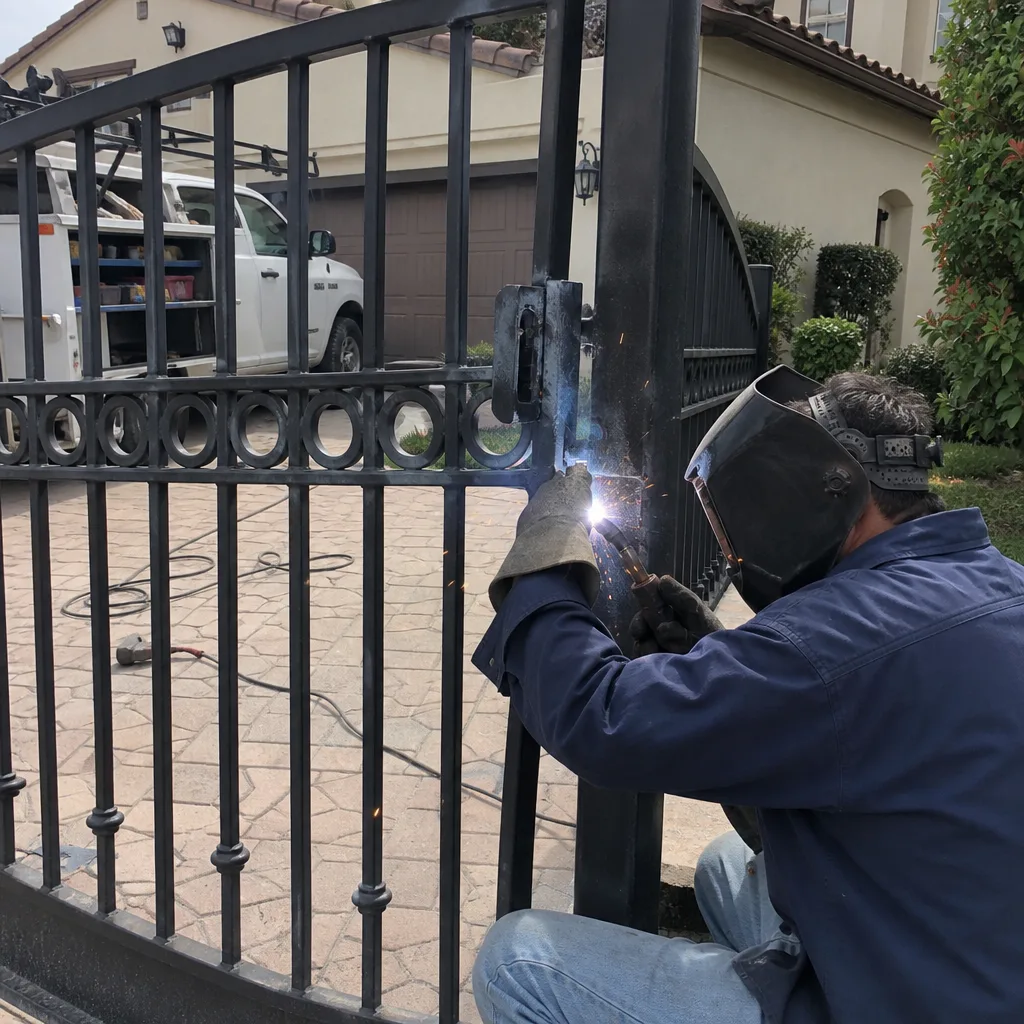
Irvine’s winter moisture doesn’t come from rain. It comes from condensation. December and January mornings bring marine layer air inland, and surfaces that cooled overnight collect a thin film of water. Your gate hardware sits in that film every morning until the sun burns it off. Then it dries. Then it happens again the next morning. After a month of this daily cycle, the inside of a poorly sealed control box looks like it’s been misted with a spray bottle.
Two components are specifically vulnerable.
Limit switches are the mechanical or magnetic switches that tell the operator where the fully open and fully closed positions are. They’re positioned near moving parts, often in the path of whatever small amount of water works its way into the housing. Condensation settles on the switch contacts, and over time the contacts corrode. A corroded limit switch reads intermittently. The gate stops three inches short of full close. Or it reverses right before the close limit. Or the operator keeps running the motor after the gate stops because the switch never registered, which burns out the motor and the gear train.
A photo-eye, also called a photocell, is the infrared beam that runs across the gate opening and stops the gate if anything breaks the beam. In winter condensation conditions, the lens on the photo-eye fogs. When the lens fogs, the beam scatters. The photo-eye reads a false obstruction. The gate refuses to close, or starts closing and immediately reverses. We get a cluster of these calls in Irvine every December, and the fix is usually simple: clean the lens, dry the housing, and check that the weather seal on the unit is intact.
Winter Checklist for Condensation-Prone Hardware
- Open the control box on a dry morning. Look for water droplets, condensation marks, or any white residue on metal surfaces.
- Check the weather seal on the control box door. A compressed, cracked, or missing gasket is the entry point for moist air.
- Clean photo-eye lenses with a dry microfiber cloth. Don’t use glass cleaner. It leaves a residue that attracts moisture.
- Test the limit switches by running the gate through a full open-close cycle and watching where it stops. Note whether it slams the stop or stops short.
- Photograph any corrosion you find and note it in your maintenance log.
The Irvine Month-by-Month Gate Intervention Calendar
This is the calendar we’ve built from 22,000+ Gate Repair services since 2014 across Irvine and the surrounding area. It’s tied to what we actually see in the field, not to generic seasonal advice. Each item takes ten to twenty minutes. The point is to intervene before the failure, not to make your gate look nice.
January
Peak condensation month. Open the control box on a dry morning and look for moisture. Clean photo-eye lenses. Run a full cycle and note where the gate stops relative to the stops. If the gate slams or stops short, the limit switches need attention before the condensation season ends.
February-March
Second Santa Ana window. After every serious wind event, grab a wrench and check the hinge bolts, track brackets, and operator mounting bolts. If the gate looks different in any way, sagging, scraping, slower than usual, call before the misalignment becomes a motor failure.
April-May
The quiet window. This is the best time for non-urgent work. If you know a hinge is wearing or the motor has sounded rough all winter, schedule the repair now before the summer heat puts additional load on the system. Replacement parts arrive faster and technicians have more scheduling flexibility.
June
Pre-heat check. Open the control box and photograph the board. Look at the capacitors specifically. If you see any doming or residue, address it now. A capacitor replacement in June costs a fraction of a control board replacement in September.
July-September
Heat season. Run the gate once a week and listen. A new hum, a slower cycle, a delay between pressing the remote and the gate moving, these are the early signs of heat-stressed electronics. If the gate behaves differently on a 100°F day than it does on an 80°F day, the board is telling you something.
October-December
Primary Santa Ana window. This is when we get the most misalignment calls in Irvine. Check the fasteners after every wind event over 30 mph. Run the gate and watch it closely at the midpoint of travel, which is where binding shows up first. Photograph the hinges, wheels, and tracks.
Why This Calendar Works
Every item on this calendar maps to a specific failure mechanism that we’ve documented in Irvine’s climate. Heat degrades capacitors. Wind loosens fasteners and throws gates off plumb. Condensation corrodes limit switches and fogs photo-eyes. The calendar puts you in front of each mechanism in the month when it appears. You don’t need to diagnose anything. You just need to look and photograph.
How to Photograph and Date Your Gate Hardware for a Longitudinal Record
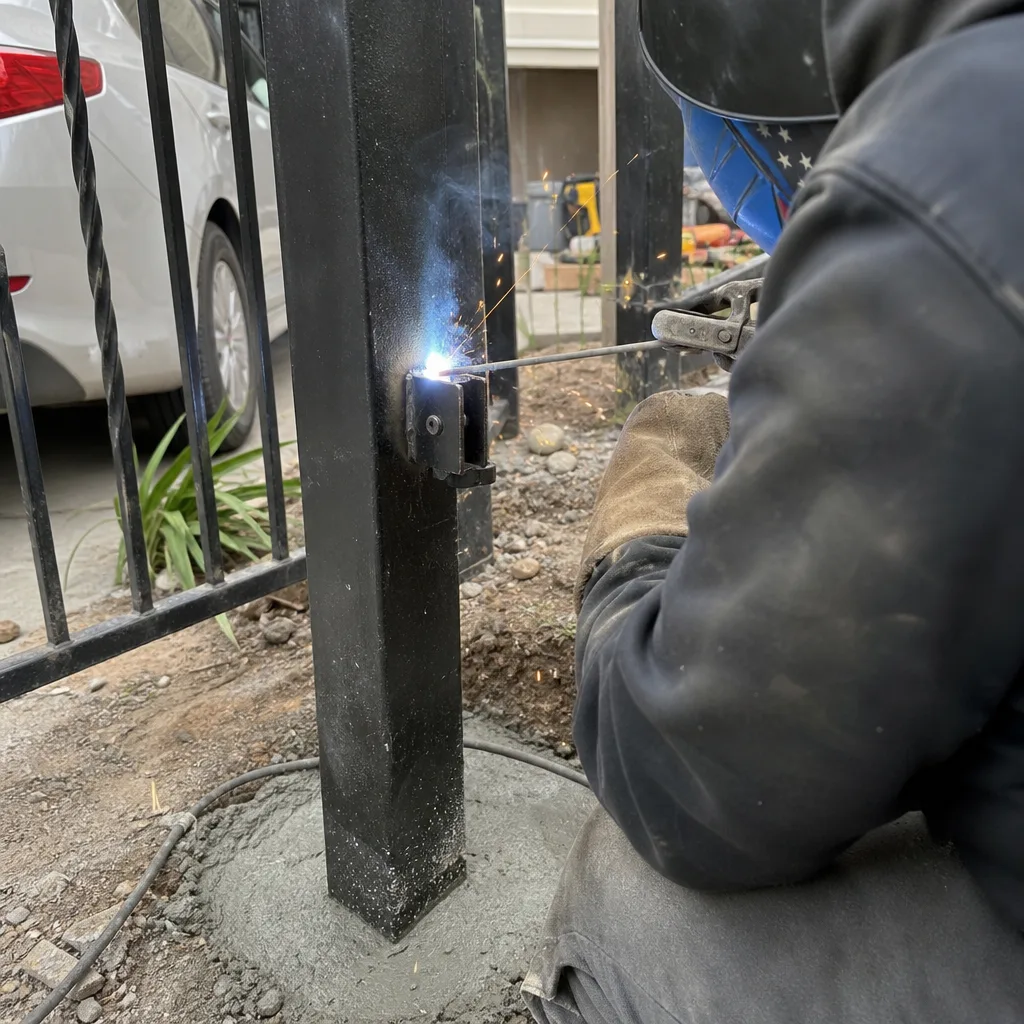
The single most useful thing any Irvine homeowner can do for their gate is take dated photographs at every seasonal checkpoint. This is not about having pictures. It’s about having a comparison baseline. Most gate wear is gradual. You don’t notice a hinge that’s moved three degrees from one month to the next. You do notice it when you hold up last January’s photo next to this January’s photo.
This is the same documentation habit Adrian Vance developed on commercial access-control sites starting in 2014, adapted for residential use. Every photo should show the same angle, the same framing, and enough context that anyone can identify the component. Name the file with the date and the component: 2026-01-15-hinge-left-post.jpg.
The Five Photos to Take Every Season
- Control board straight-on. The entire board, in focus, with the box open. This shows capacitor condition and any corrosion or moisture marks.
- Hinge plate close-up on each hinge, both the gate side and the post side. Capture any gap between plate and post.
- Track and wheel assembly for slide gates, or the full open gate face for swing gates. Stand in the same spot every time.
- Photo-eye lenses and housing. Shows fogging, cracking, and alignment drift.
- Operator exterior including the area around the mounting bolts. Shows whether the operator has shifted.
Store the photos in a folder or cloud album titled with your address and “gate maintenance.” When something eventually fails, and it will, you’ll have a record that lets a technician see exactly what the hardware looked like before the failure. That speed and clarity is the difference between a correct diagnosis and a guess.
This is also what we mean when we talk about The Haven Standard, our operating rule across every job in Irvine. Clause 4, “Evidence on every job,” means every service visit includes a documented photo record: what was found, what was adjusted, what was installed. We leave the photos with you and file them in the job record. Your own seasonal photos extend that same principle between visits.
What to Check on LiftMaster, Ghost Controls, and Viking Motors in Irvine
Not all gate motors handle Irvine’s climate equally well. We service nine brands, and over 22,000+ repairs, we’ve learned where each one tends to show wear in this specific environment. Here’s what to watch on three of the brands we see most often on Irvine properties.
LiftMaster
LiftMaster is the most common residential brand in Irvine, largely because it’s what most gate installation companies default to. The boards are well-built but they’re sensitive to sustained heat. The electrolytic capacitors on older LiftMaster boards are the first thing we check in September. LiftMaster’s limit-setting procedure is also easy to knock out of calibration during a wind event if the gate takes a hard hit. Listen for the motor running slightly past the close point.
Ghost Controls
Ghost Controls makes solar-compatible operators that are popular on Irvine properties where running conduit to the gate would mean trenching across the driveway. The sealed housing holds up well against moisture, but the photo-eye wiring is thinner than most wired brands and can degrade in the condensation cycle if the connections aren’t protected. Check the photo-eye lenses and any exposed wire junctions during winter months.
Viking
Viking operators are built for heavy-duty use and handle heat well, but the limit-switch contacts on older Viking units are exposed to whatever moisture gets into the housing. December and January are the months we replace the most Viking limit switches in Irvine. If your Viking gate stops short or slams the stop in winter, the limit switch is the first suspect. Viking parts are also more expensive than most residential brands, so addressing limit-switch corrosion early matters more.
Common Mistakes to Avoid
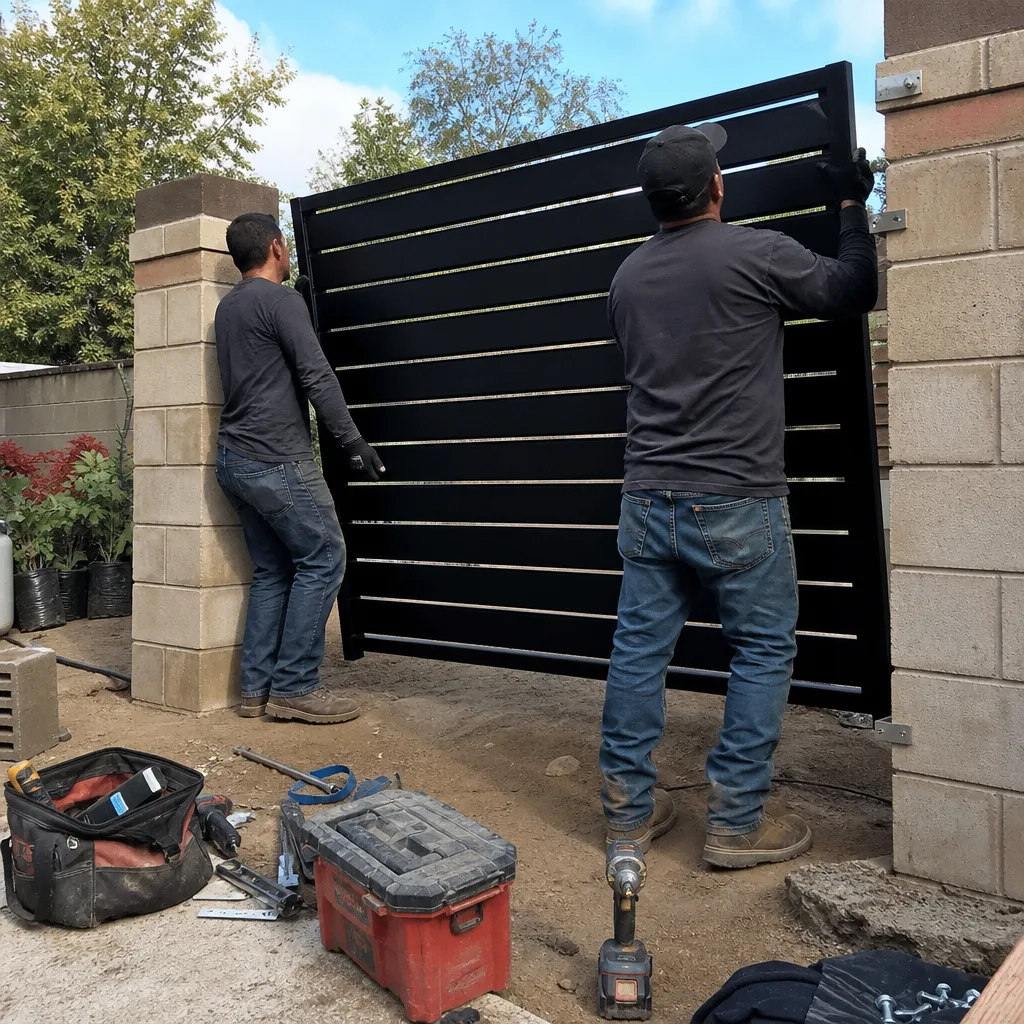
- Lubricating the problem away. A noisy gate is not a dry gate. Spraying lubricant on a hinge that’s worn or a track that’s bent hides the symptom and accelerates the failure. Noise means something has changed. Find out what.
- Waiting until the gate fails completely to look at it. By the time a gate won’t open, the failure mechanism has usually been developing for weeks or months. The ten-minute seasonal checks in this guide exist so you don’t end up at that point.
- Assuming the motor is always the problem. We replace more burned-out motors that were fine than we replace worn motors. The motor usually fails because the gate was misaligned or the limit switch was corroded and the motor ran too long on every cycle. Fix the root cause first.
- Buying the cheapest replacement part online and installing it yourself. A control board or limit switch bought from an unvetted source often has the wrong firmware, the wrong voltage rating, or no compatibility with your specific model. We’ve seen more damage from improvised repairs than from the original failure.
- Ignoring wind-event damage because the gate still works. A gate that’s slightly misaligned after a Santa Ana event still opens and closes. It’s also slowly destroying the operator, the hinges, and the track. The repair after a Santa Ana event costs less than the repair after six months of misaligned operation.
- Not photographing the hardware when it’s healthy. Without a baseline, you and your technician are both guessing about what changed. The dated photo record is the cheapest diagnostic tool you have.
- Trusting a verbal estimate over a written one. A verbal estimate leaves room for the invoice to grow. Under Haven Standard Clause 1, “Have it in writing,” every job starts with a written price delivered before any work begins. If a contractor won’t put it in writing, ask yourself why.
When to Call a Professional
Call a professional when the seasonal checks in this guide turn up something you can’t identify. A bulging capacitor, a hinge plate that’s pulled away from the post, a track bracket that’s bent, a limit switch with visible corrosion, these are all fixable, but they’re not user-serviceable for most homeowners. Also call any time the gate behaves differently, slower, louder, hesitant, reversing on its own, stopping short. A gate that’s misbehaving in small ways is telling you something about the condition of its components. You don’t need to know what it’s saying. You need someone who does, and who will show you the evidence. Vance Gate Repair Irvine offers free estimates in Irvine and leaves a documented photo record on every visit. Call (657) 258-2588 and a live person answers, 24/7.
Frequently Asked Questions
Most seasonal checkups in Irvine run between $85 and $180 for a visual inspection with tightening and lens cleaning, depending on the gate type and the number of components inspected; see The Complete Guide to Gate Repair in Irvine for a full breakdown of what’s included. If the checkup turns up a needed repair, you’ll get a written price for that repair before anything is done. Estimates are free, and every job is priced in writing before work starts. Call (657) 258-2588 to schedule a seasonal maintenance visit.
Twice a year minimum, with extra checks after Santa Ana wind events. The Irvine climate puts specific stress on gate hardware at specific times, late-summer heat on control boards, winter condensation on limit switches and photo-eyes, and wind on hinges and tracks. A spring check and an early-winter check catch the two most damaging periods. If your gate faces an open exposure and takes direct wind during Santa Ana season, add a third check in late November.
Yes. We run same-day service across Irvine for gate failures, and a live person answers the phone 24/7 at (657) 258-2588. When you call, we’ll give you a written price for the repair before any work begins.
Heat degrades the electrolytic capacitors on the control board. When the board gets too hot, the capacitors can’t smooth voltage properly and the board starts behaving erratically. This is the single most common heat-related gate failure we see in Irvine, and it’s preventable with a pre-heat-season board inspection.
Grab a wrench and check the hinge bolts, track brackets, and operator mounting bolts. If anything moves when you try to tighten it, tighten it. Then run the gate and watch it closely. If it scrapes, binds, or stops short, call before the misalignment damages the motor. For a professional post-wind inspection in Irvine, call (657) 258-2588.
Repair it if the motor itself is sound and the failure is on the board, the limit switch, or the photo-eye. In our experience across 22,000+ repairs, the motor is often the last component to fail. Board and switch replacements are a fraction of the cost of a new operator. If you’re not sure, see our DIY vs Professional Gate Repair: The Irvine Homeowner’s Decision Guide or call us; we’ll tell you what we found and what it costs to fix, in writing, before you decide.
The Bottom Line
Irvine’s climate doesn’t destroy gates all at once. It wears them down in specific, predictable ways, and those ways map to the calendar. Heat kills capacitors. Wind loosens fasteners and knocks gates out of alignment. Condensation corrodes switches and fogs lenses. If you know which mechanism is active in which month, you can check the right components at the right time and catch most failures before they strand you. The whole routine takes twenty minutes per season and costs nothing except your attention. And when something does need a professional, the Vance Gate Repair Irvine team is one phone call away at (657) 258-2588, with a written price on the table before any tool comes out of the truck.
Written by Adrian Vance, Owner at Vance Gate Repair Irvine, serving Irvine since 2014.